Table of Contents
Why Does Artwork Affect the Challenge Coin Production Process?
The final result of a custom challenge coin depends not only on its size, colors, or plating finish, but also on the original artwork. Different types of designs are better suited to different production methods. A simple logo, a portrait, a photograph, or a complex architectural scene all require different considerations during production.
If the wrong process is chosen at the beginning, the finished coin may have unclear details, poor color reproduction, weak dimensional effects, or costs that exceed the budget. On the other hand, choosing the right production method based on the artwork can improve the final result while avoiding unnecessary costs.
In this article, we will help you understand which production method or combination of processes is more suitable for different types of artwork, so your custom challenge coins can look clearer, more attractive, and better aligned with your budget.
For a broader overview of sizes, materials, pricing, and the full production process, you can also visit our custom coins guide.
Simple Logos, Emblems, and Text Designs
If your artwork mainly consists of a simple logo, text, or emblem, you usually do not need complicated 3D sculpting. For this type of challenge coin design, a 2D structure with soft enamel filling is often a very suitable choice. It uses clean metal lines to separate different color areas, making the logo, text, and graphic edges look sharp and well-defined while still keeping a clean metallic texture.
The focus of this type of design is clarity, color separation, and brand recognition, rather than complex dimensional details. 2D soft enamel allows the metal borders and enamel colors to create a strong contrast, making the overall design more eye-catching.
You can refer to this coin we produced for OpenText:
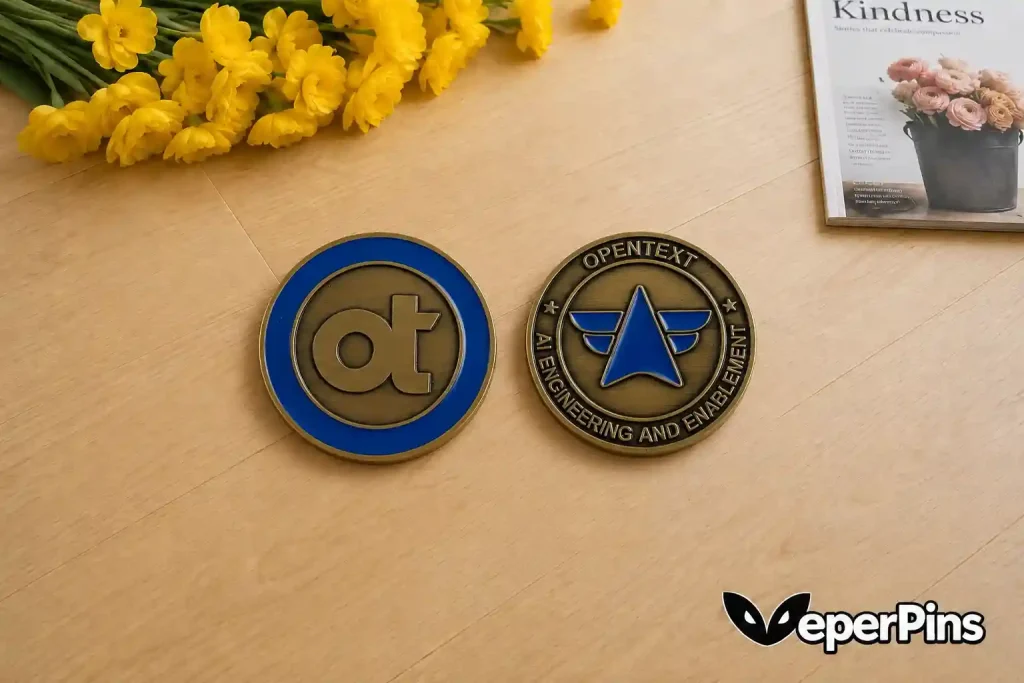
Its design mainly features a logo, text, and clear color blocks, so it does not require complex 3D relief. With standard metal lines and soft enamel color filling, the coin can clearly present the brand message and commemorative purpose.
Portraits, Animals, Vehicles, and Architecture
If the artwork includes portraits, animals, vehicles, buildings, or complex scenes, 3D relief is usually more suitable than a standard 2D effect. These types of designs need to show contours, shadows, and depth, and 3D sculpting can make facial features, vehicle lines, or architectural details appear more dimensional.
For commemorative pieces, 3D relief can also enhance the overall texture and collectible value. However, if the original artwork is very simple, there is no need to force a 3D effect, as it may only increase the cost without significantly improving the final result.
You can refer to this challenge coin we made for the S.C.A.R.E. 75th Anniversary:
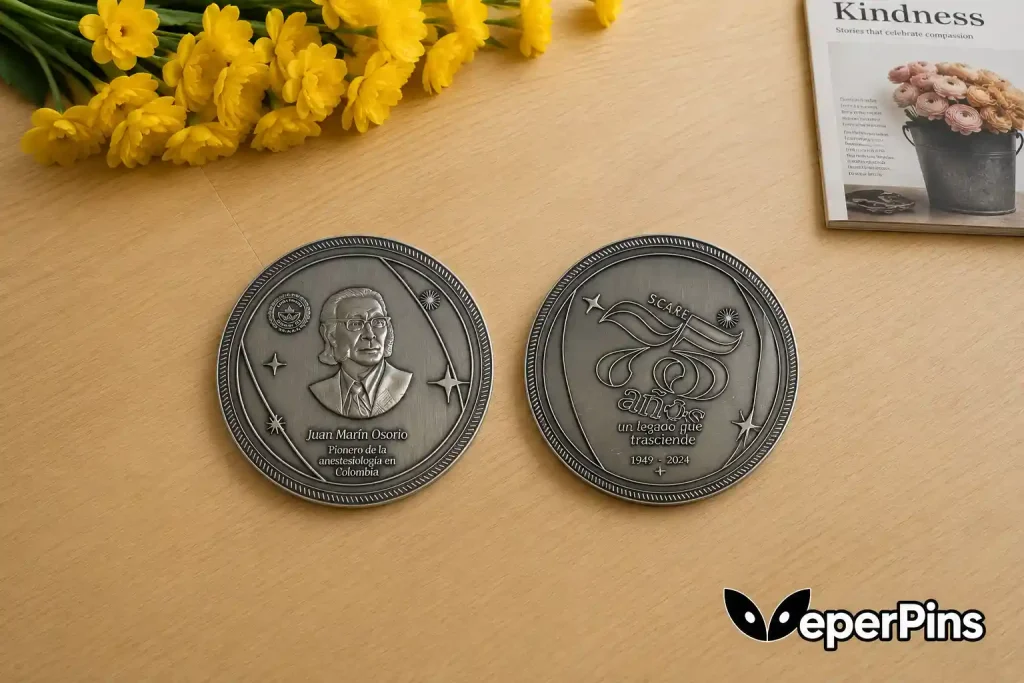
The portrait on the coin uses high-relief sculpting, which helps present facial contours, expression details, and carved layers more clearly, making the commemorative theme stand out.
Photos, Gradients, and Complex Color Details
If your artwork includes photographs, gradients, complex shadows, or very small color details, UV printing is usually more suitable than traditional enamel. Enamel is better for clean solid-color areas, but it is not ideal for reproducing photo-level color changes.
UV printing can better preserve the color layers, light and shadow, and fine details of the original artwork. It is suitable for portrait photos, animal portraits, event key visuals, complex emblems, or full-color designs. Some designs can also combine metal relief with UV printing, giving the finished piece both a metallic texture and richer color presentation.
You can refer to this police K9 NADO challenge coin:
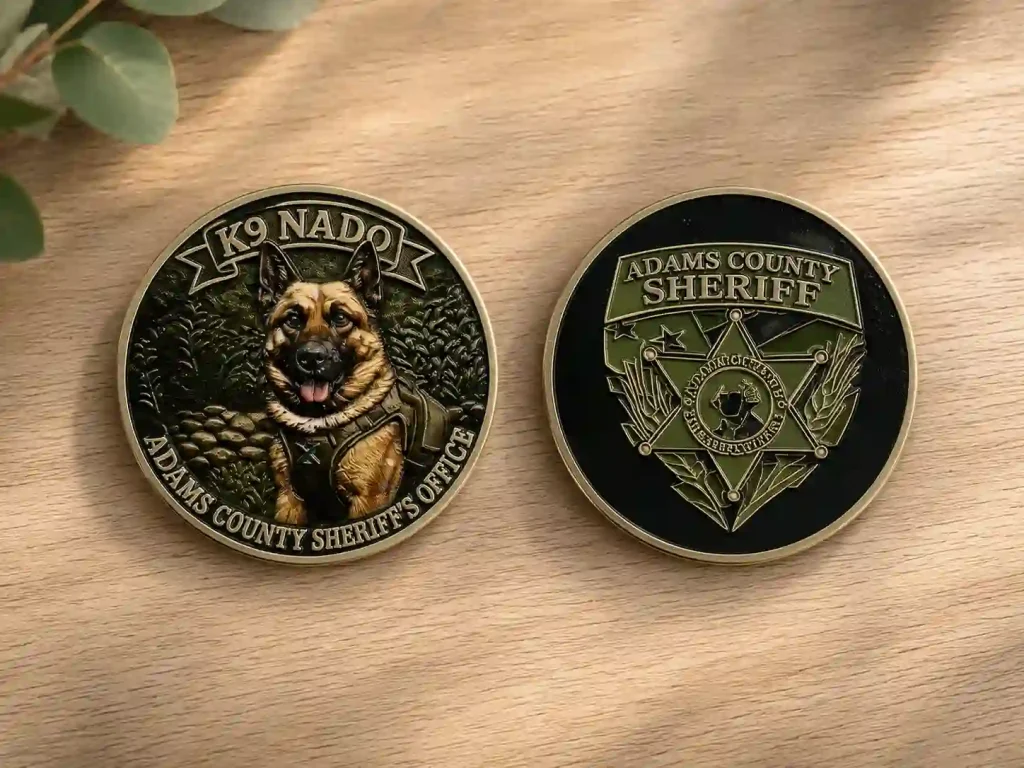
For this type of police dog portrait design, UV printing is more suitable than enamel. The dog’s fur, eyes, tongue, and the background leaves contain many color variations. If enamel were used, many details would need to be simplified. UV printing can better reproduce the original colors and shadows, making the finished coin look closer to a real photo.
Premium Corporate Gift Designs
If the coin is used for a company anniversary, client gift, employee award, or business event, the focus is usually not complex dimensional detail, but a clean, refined, and professional appearance. Corporate designs often include logos, brand slogans, commemorative years, or project names, so hard enamel, polished gold, polished silver, or black nickel finishes are often better choices.
These coins need to reflect the brand image, so the surface finish and overall details are important. Hard enamel creates a smoother surface, while polished plating enhances the metallic shine, making the finished coin look more formal and suitable as a premium business gift.
For example, this Molten volleyball-themed hard enamel commemorative coin:
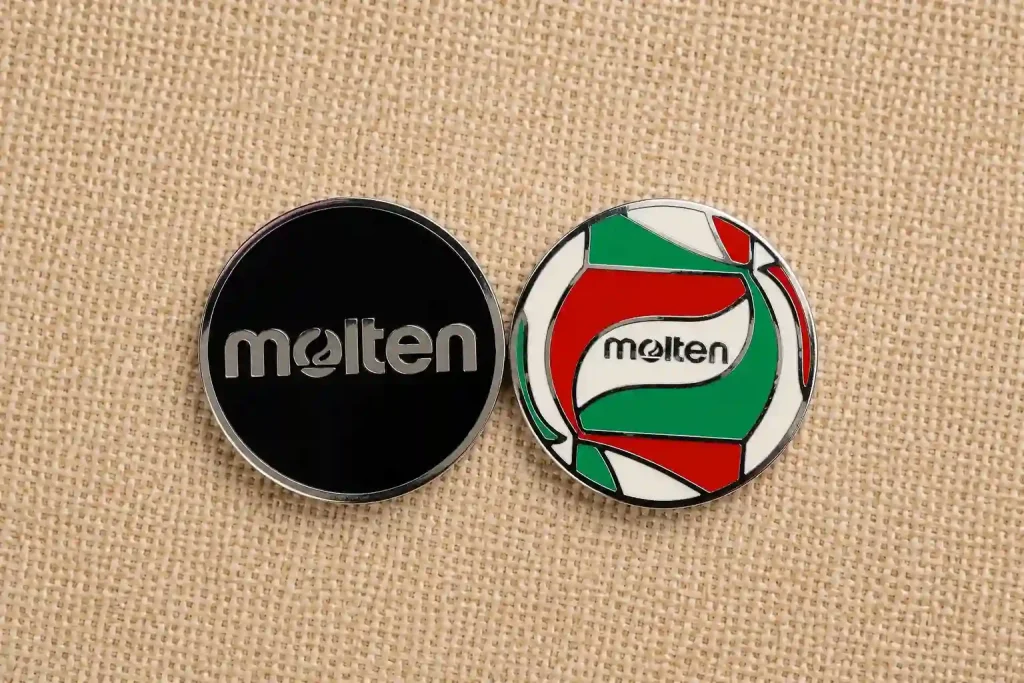
The design mainly consists of a brand logo, volleyball graphic, and large solid-color areas. The color boundaries are clear, and the artwork does not require photo-level gradients or complex shadows. Therefore, hard enamel is a good choice to highlight the brand’s refined appearance and make the finished coin look clean, premium, and timeless.
Military, Vintage, and Strong Relief Designs
If the artwork includes shields, badges, weapons, flags, buildings, character silhouettes, or rich carved textures, antique plating is usually more suitable than standard polished plating. Antique gold, antique silver, and antique copper finishes create darker recessed areas, which make the relief layers more visible and give the design more depth and commemorative value.
This effect is ideal for military, police, firefighter, historical, or vintage-style designs. For relief designs with many details, antique plating not only highlights the lines but also reduces strong reflections that may hide fine details, making the overall appearance heavier, clearer, and more powerful.
For example, this military police special operations challenge coin:
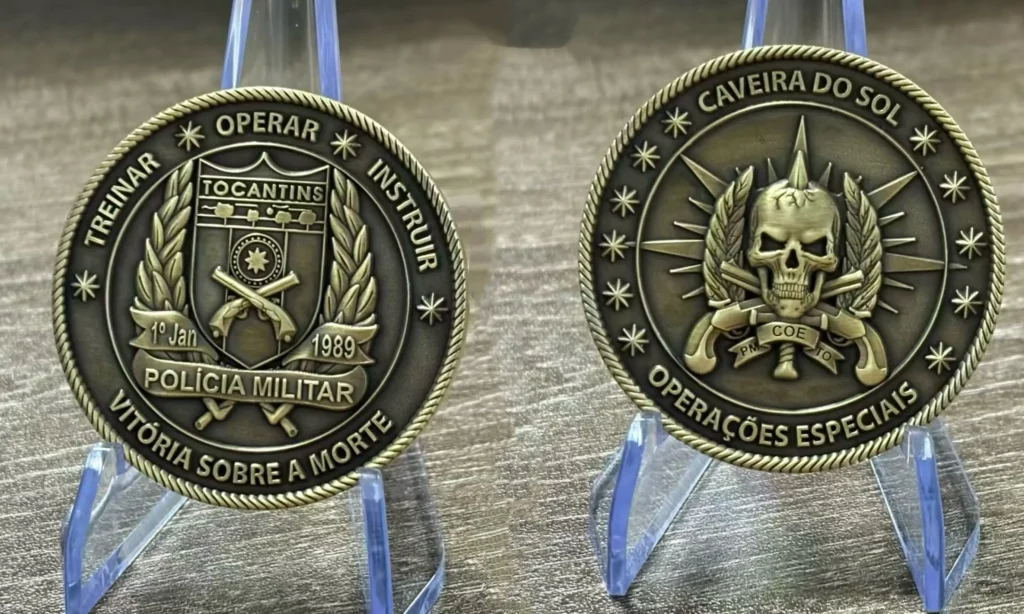
The skull, shield, laurel leaves, pistols, banner, and rope edge all use layered relief details. The raised areas look sharp and strong, while the recessed background works with the antique plating to create light-and-dark contrast, giving the entire coin a bold and rugged appearance.
How to Decide Which Process Is Suitable Before Production
Before making a custom challenge coin, it is better to evaluate the artwork itself instead of deciding from the beginning whether to use 2D, 3D, or UV printing. For example, if the design mainly contains a clear logo and text, 2D soft enamel is usually enough.
For artwork with people, animals, vehicles, or buildings, 3D relief is a good choice because it adds depth and detail. For photos, gradients, or full-color designs, UV printing usually gives a more accurate result.
For corporate gifts, hard enamel or polished plating can make the coin look cleaner and more premium. For military, vintage, or detailed relief designs, antique plating helps bring out the texture.
Not sure which process fits your design? Send us your logo, sketch, or design file, and we’ll recommend a suitable option based on your artwork, budget, quantity, and intended use.