
Table of Contents
When making custom enamel pins for an event, brand, or team, one of the first questions you may face is whether to choose soft enamel or hard enamel.
Both options can create attractive, durable pins, but they differ in appearance, texture, production process, and price. Soft enamel is more textured and usually more affordable, while hard enamel has a smoother, more polished finish and a more premium look.
Next, let’s compare hard enamel and soft enamel pins to help you decide which option fits your custom design best.
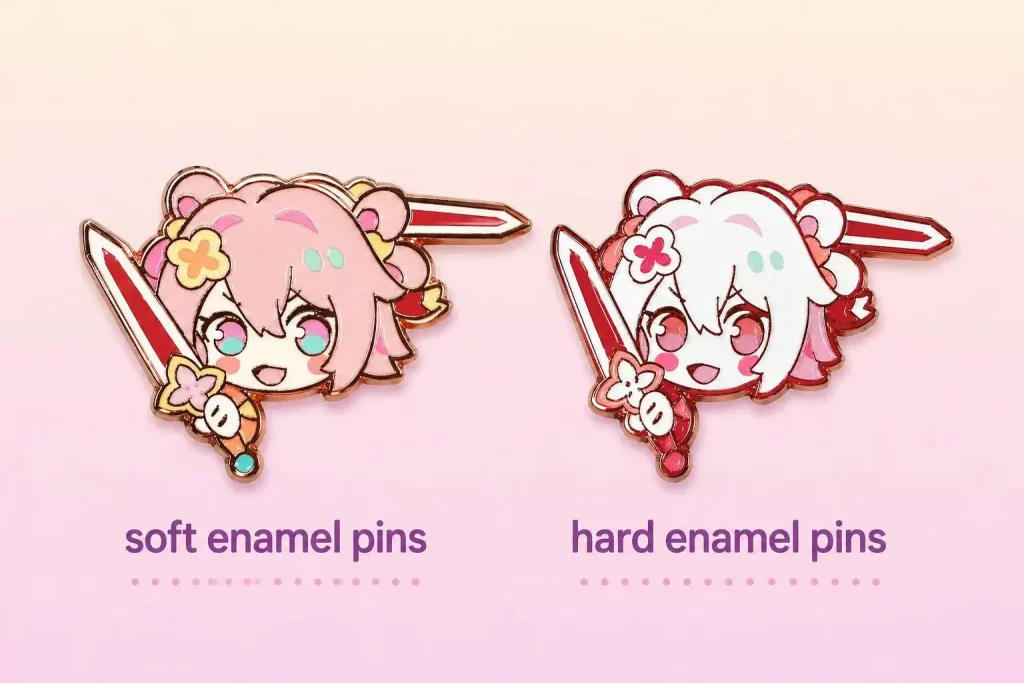
Soft vs Hard Enamel Pins Comparison Chart
| Feature | Soft Enamel Pins | Hard Enamel Pins |
|---|---|---|
| Surface | Raised metal lines with recessed colors | Flat, smooth surface |
| Appearance | More textured and dimensional | Cleaner and more polished |
| Price | Usually lower | Usually higher |
| Durability | Good for regular use | Better for long-term wear |
| Design Style | Works well with detailed designs and clear metal lines | Works well with simple logos and clean shapes |
| Common Uses | Events, schools, clubs, artists, giveaways | Corporate gifts, retail products, commemorative pins |
What Are Soft Enamel?
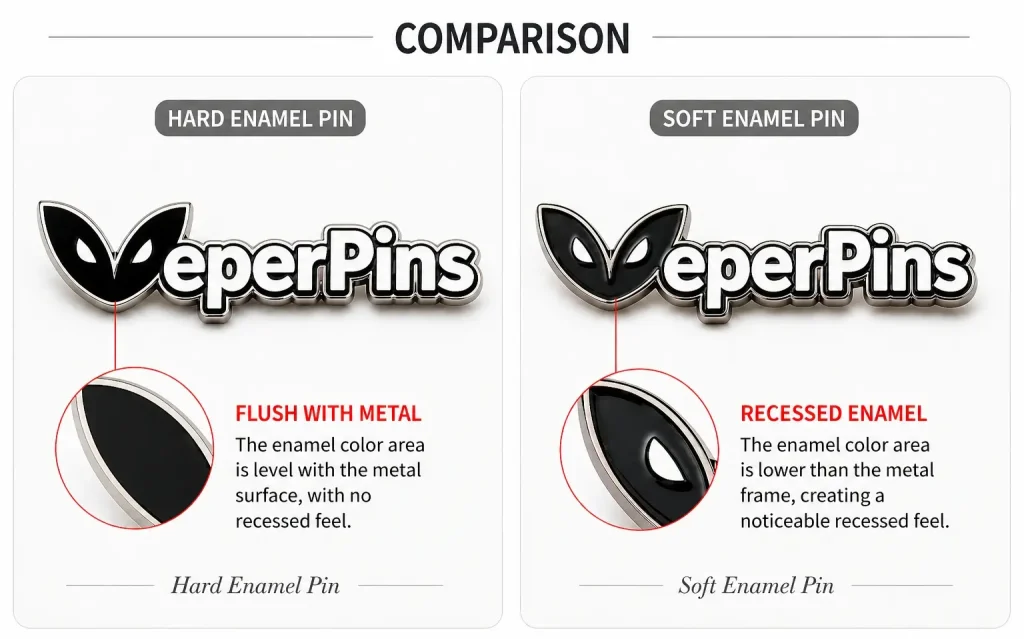
Soft enamel is a popular choice because it gives enamel pins a clear, textured look. During production, the colors are filled into the recessed areas and baked to set the enamel, while the metal lines stay raised and plated.
This raised-and-recessed surface gives the pin more depth, makes the outlines easier to see, and creates a noticeable texture when touched.
What Are Hard Enamel?
Hard enamel also known as cloisonné, is known for its smooth, flat surface and refined craftsmanship.
During production, color is filled into the recessed areas of the metal base, then baked, ground, and polished several times until the enamel is nearly level with the raised metal lines.
If you’re interested in how hard enamel pins are made, check out our article.
Key Differences Between Soft and Hard Enamel Pins
Next, let’s compare the two options so you can see which one fits your pin better.
1. Surface Texture
Custom soft enamel pins have a textured surface. The metal outlines are raised, while the colored sections are filled into recessed areas. When you touch the pin, you can clearly feel the height difference between the raised borders and the filled areas.
This raised-and-recessed structure gives the pin a more dimensional look and helps make the artwork more defined, especially for designs with lines, text, logos, or separated color blocks.
Custom hard enamel pins have a smoother surface. During production, the colors are filled, baked, ground, and polished until the surface is nearly level with the metal outlines. The finished piece feels smooth, flat, and closer to jewelry or premium metal accessories.
2. Appearance
Soft enamel pins usually look more vivid, lively, and eye-catching. The clear separation between the metal outlines and filled areas creates stronger contrast and depth, helping the design stay clear even at smaller sizes.
This process works well for colorful and playful designs, such as mascot pins, cartoon pins, event pins, school pins, club pins, artist merchandise, and promotional gifts.
Hard enamel pins have a flatter and more polished appearance. Since the surface is ground and polished, the overall look is cleaner, more consistent, and more premium.
This finish is often used for corporate logo pins, business gifts, anniversary pins, award pins, collectible pins, premium brand merchandise, and commemorative products.
3. Design Details and Color Performance
Soft enamel works better for artwork with clear lines, bright colors, and strong contrast. Since each color area is usually separated by raised metal lines, the artwork is easier to read, even when the pin is small. It is a good fit for colorful designs, cartoon-style artwork, event pins, or any design that needs a more eye-catching look.
Hard enamel is better for clean and simple artwork. Because the surface is ground and polished, the finished pin feels flatter, smoother, and more refined. If you want the pin to look cleaner and more premium, this style is usually a better fit.
However, if your artwork includes gradients, shadows, watercolor effects, or photo-like details, enamel alone usually cannot reproduce them well. In that case, printing may be a better option, or the printed details can be added on top of the surface.
4. Cost
Soft enamel pins are more budget-friendly, and the production process is more flexible. Since they do not require repeated grinding and polishing, they are a good choice for bulk orders, event pins, promotional gifts, and designs with a limited budget.
Cloisonné enamel pins usually cost more because they require extra filling, baking, grinding, and polishing to create a smooth, flat surface.
However, the final price of custom pins can also be affected by a few other factors :
| Price Factor | How It Affects the Cost |
|---|---|
| Size | Larger pins usually require more metal and enamel. |
| Quantity | Higher quantities usually reduce the unit price. |
| Colors and Design Detail | More colors or complex details may increase production time. |
| Metal and Plating | Different materials and plating colors can affect the final cost. |
| Add-ons | Printing, epoxy coating, special attachments, or laser engraving may add extra cost. |
| Packaging and Shipping | Custom packaging and faster shipping methods can increase the total price. |
5. Common Uses
These two processes also work better for different types of projects.
| Soft Enamel Pins | Hard Enamel Pins |
|---|---|
| Events, schools, and clubs | Corporate logos and business gifts |
| Artist merchandise and character designs | Awards and anniversary gifts |
| Promotional giveaways and brand campaigns | Collectibles and limited-edition merchandise |
| Casual wear and everyday accessories | Premium brand accessories |
Features of Soft Enamel Pins
Flexible Design Options
Soft enamel pins are flexible in design and work well for many styles, such as brand logos, cartoon artwork, event pins, and more.
If your design has multiple colors, or you want to add effects like glitter, glow-in-the-dark, or transparent enamel, the process can be adjusted to make the final pin look more detailed and eye-catching.
Flexible Plating Options
This process can be matched with many plating colors, such as gold, nickel, black nickel, rose gold, antique gold, and antique silver.
Since the metal lines are raised, the plating color changes the whole feel of the pin. Gold looks brighter, black nickel gives stronger contrast, and antique finishes give it a more vintage look.
Suitable for Bulk Custom Orders
This process is stable and works well with machine coloring, so production is faster and the cost is easier to control.
Features of Hard Enamel Pins
Softer Colors and a Cleaner Look
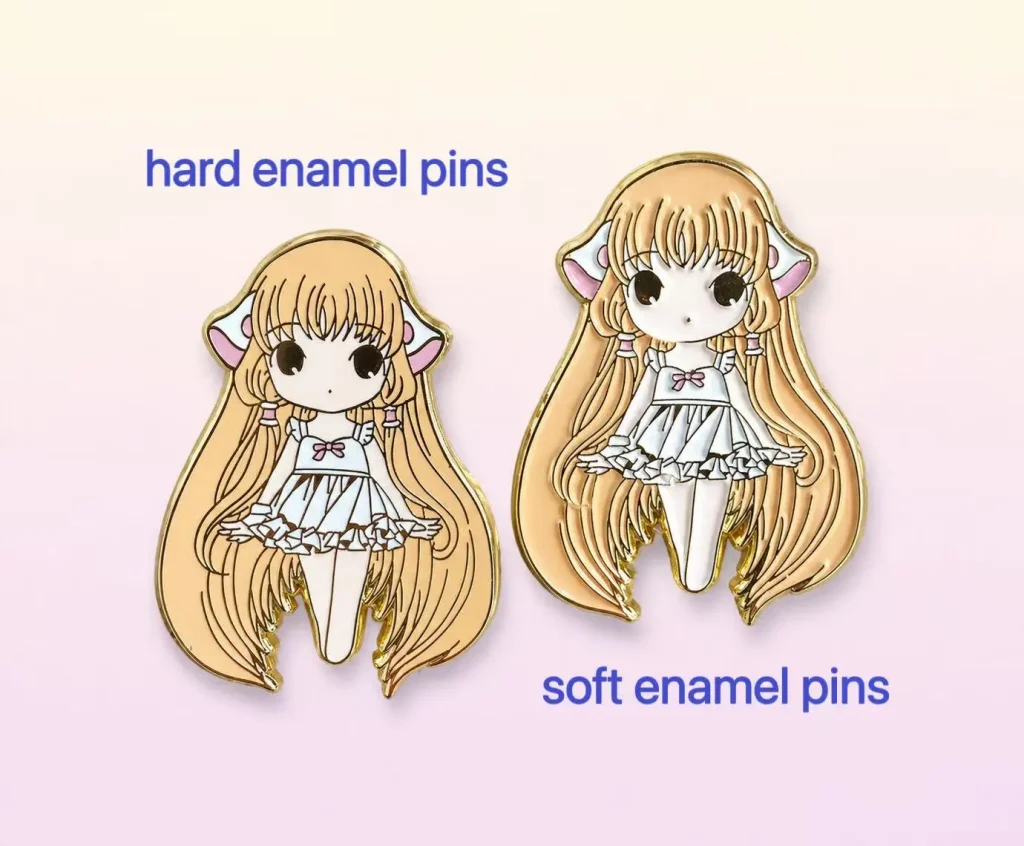
Hard enamel pins usually have a softer look. The colors are not too bright or sharp, so the finished pin feels cleaner and more refined. This style is a good choice when you want the pin to look neat, durable, and more high-end.
Smooth Surface with a Polished Finish
This style feels more like a finished, high-quality piece rather than a simple promotional item. The colors look more refined, and the metal edges feel less harsh, giving the whole pin a cleaner and more polished look.
This process is a better choice for projects that are meant to be used for a long time, worn often, or designed to represent a brand in a more professional way.
Clear Metal Lines and Simple Artwork
At the same time, it has a clean surface without too much raised texture taking attention away from the design. When you hold the pin, the metal plating, color areas, and overall artwork are easier to see clearly.
The finished look feels clean and neat, without looking busy.
That is why many people see it as more refined and more valuable.
Which Type of Pin Is Right for You?
Whether you choose soft enamel or hard enamel pins, there is no absolute right or wrong option. The key is to choose the process that fits your design and how you plan to use the pins.
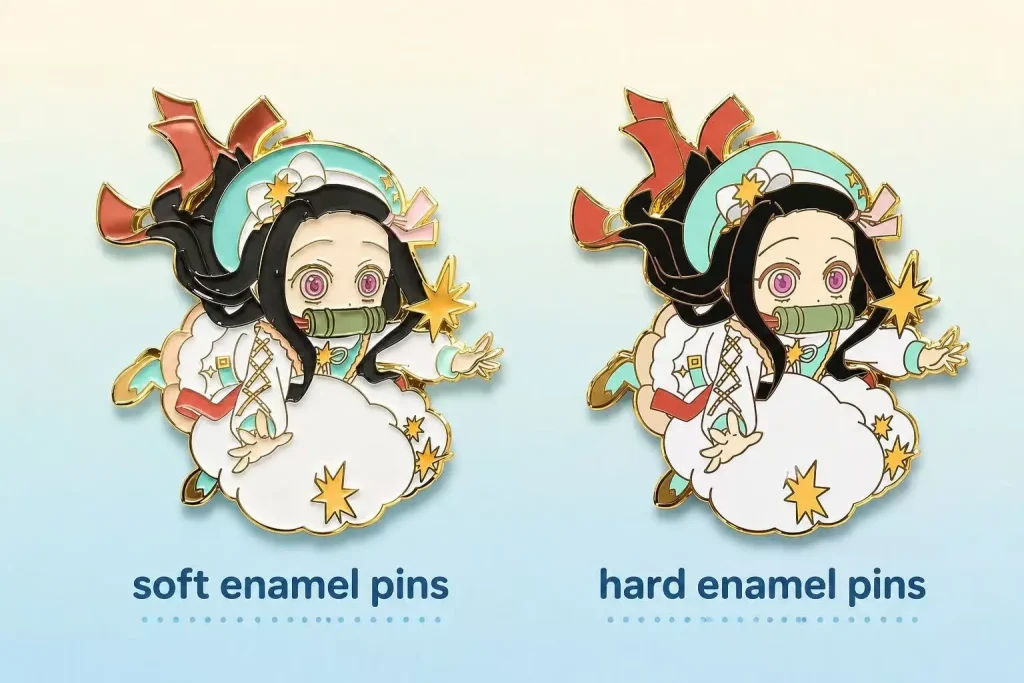
For designs with many colors, clear line details, or a more textured finish, soft enamel is usually a better fit. It makes the metal lines stand out and works well for artwork with clear color separation.
If you prefer a smooth, refined surface, or want your pins to look more formal and premium, hard enamel may be the better option.
If this is your first time ordering pins, our Beginner’s Guide to Custom Pins is a good place to start before you decide.
Still not sure which process is right for your design? Contact VeperPins. Our designers can review your artwork, check the lines, colors, and details, and recommend the most suitable production method.


