Table of Contents
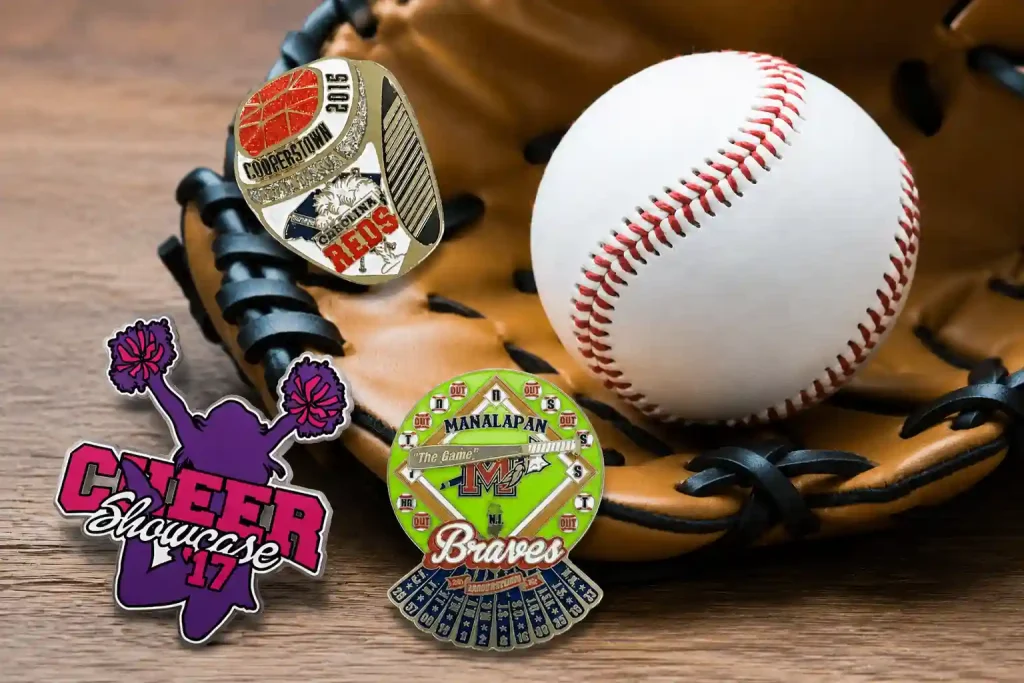
Custom trading pins have long been a fun tradition in youth baseball and softball tournaments. For many kids, they are more than small team souvenirs — they are part of the tournament experience. Players trade pins with other teams, compare different designs, collect their favorite styles, and take home memories that last long after the final game.
But when every team brings its own pins to the tournament, a basic design may not be enough to stand out. Parents, coaches, and team organizers often need to think beyond simply placing the team logo on a pin.
In this guide, VeperPins shares practical trading pin design ideas to help your team create pins that are more recognizable, more exciting for kids, and easier to trade during the tournament.
What Makes a Good Trading Pin Design?
Clear Team Identity: Personalized trading pins should show the team clearly. The team name, mascot, colors, year, and tournament name should be easy to recognize at a glance.
The Right Size: Size affects how much detail the pin can show. For most tournaments, 1.75 to 2 inches works well. For larger events like Cooperstown or national tournaments, 2 to 2.5 inches can make the pin stand out more.
One Special Feature: A special feature can make the pin more fun to trade. Glitter, a spinner, a slider, or a small dangler can add interest, but one or two features are usually enough.
Team Personality: The best designs feel personal to the team. Instead of only using a logo, add details from the mascot, hometown, team colors, or tournament theme.
Clean Layout: Because the design area is small, too much text can make the pin hard to read. Keep the key details and let the main artwork stand out.
Worth Trading: A custom team trading pin should feel different from a basic logo pin. It should look clear, fun, and interesting enough for other players to want to trade for it.
Team Logo Trading Pin Ideas
Custom trading pins with your team logo should be built around the strongest part of your artwork, not just copied directly onto a pin. Start by looking at what makes the logo easy to recognize, whether it is the mascot, team name, initials, or a bold graphic mark.
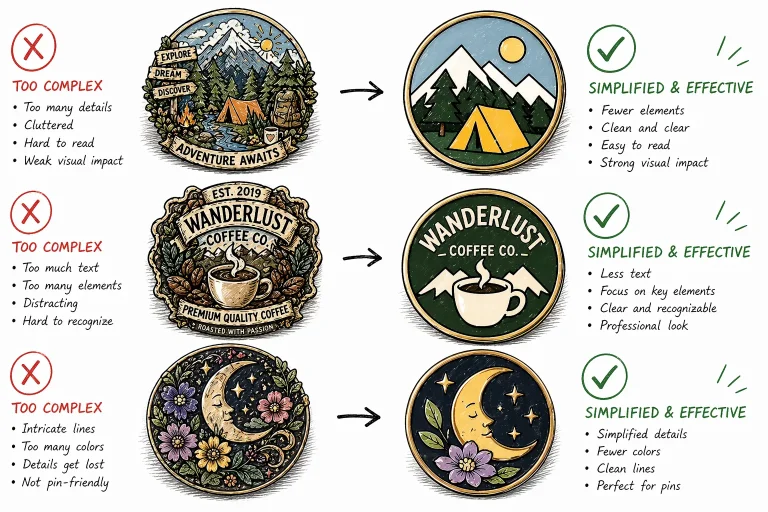
If the artwork has a lot of small details, simplify the lines while keeping the main shape and team colors. A design that looks good on a screen may not always stay clear at pin size.
When the outline is strong, use it to shape the pin. Animal heads, shields, flames, and letter marks often work better as custom shapes than a standard round pin.
Keep the colors close to the team’s original look. Clear main colors, accent colors, and outlines help the finished pin stay recognizable and avoid looking like another team’s design.
Mascot Trading Pin Ideas
Mascots are one of the easiest design elements to remember on a trading pin. Compared with a simple team logo, a mascot with a clear expression or action gives the pin more personality and makes it more appealing for pin trading at tournaments.
If your team has a tiger, wolf, shark, eagle, bulldog, panther, or another mascot, you can make it the main focus of the pin. For example, a tiger can be shown as a roaring tiger head, a wolf can be paired with a moon, a shark can bite into a softball, an eagle can grip a baseball, or a bulldog can hold a bat.
For teams heading to larger events, such as a 12U softball team going to the USSSA World Series, players usually trade pins during opening ceremonies, around the fields, or between games. In those moments, other players may only glance at the pin for a second, so the mascot should be large, easy to recognize, and full of character.
When designing mascot trading pins, the background does not need to be too busy. A strong mascot pose, combined with your team colors and team name, is often enough to make the pin stand out and stay easy to recognize.
Player Name and Number Ideas
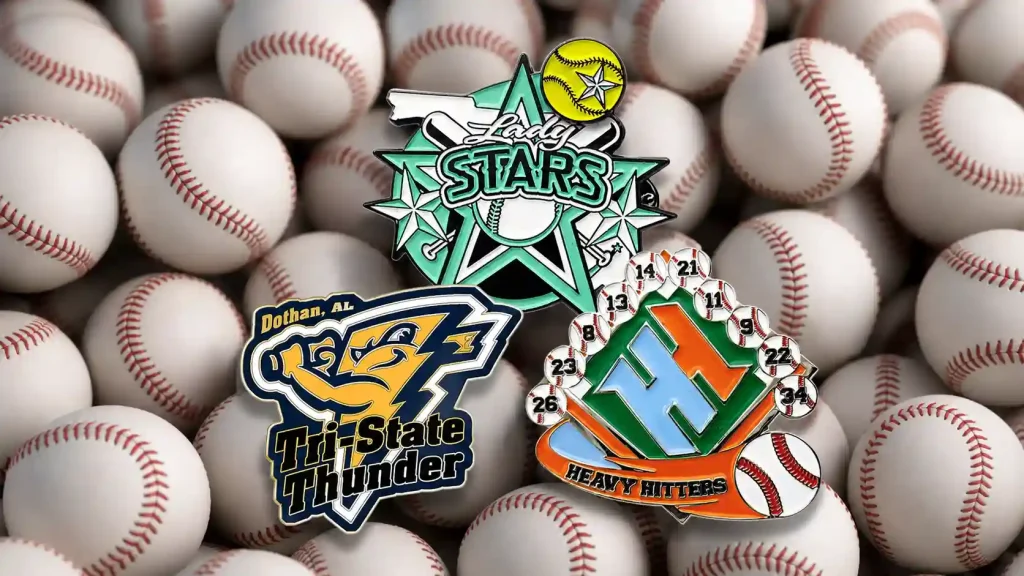
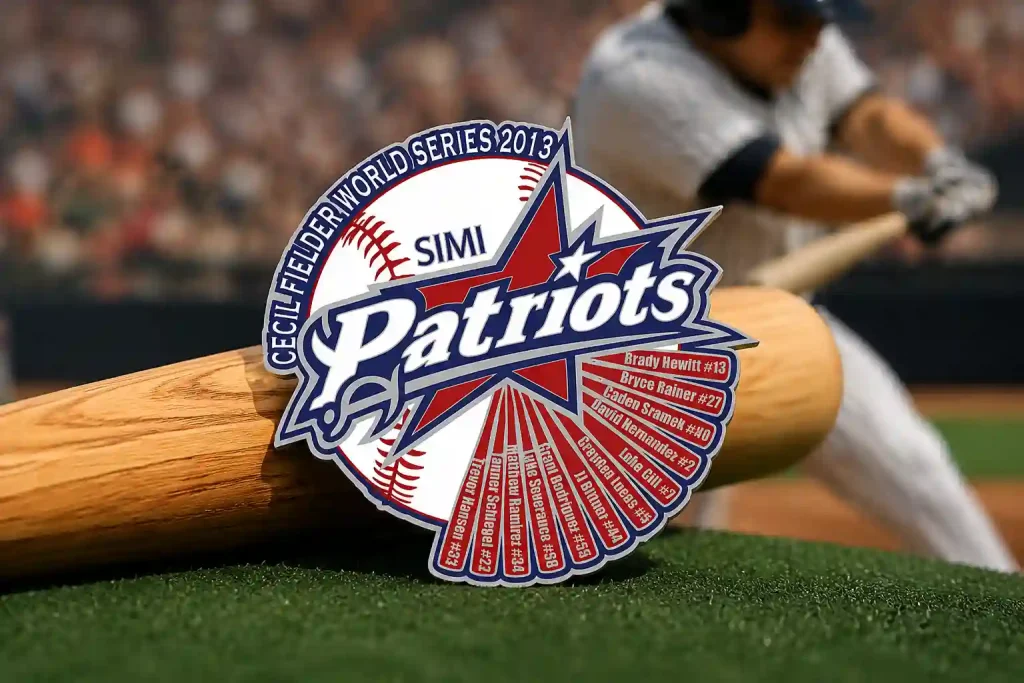
Player names and numbers can make trading pins feel more personal. When designing the pin, you can place the jersey number on a small jersey, baseball, softball, helmet, bat, or glove. Keep the number large and bold so other players can read it quickly. If the pin size is large enough, you can also add the player’s name. For smaller pins, using only the number usually keeps the design cleaner.
A good approach is to use the same layout for the whole team and only change each player’s name and number. This keeps the team look consistent while still giving every child their own personalized pin.
Try not to crowd the design with names, numbers, and too many graphics at the same time. At the tournament, people usually only take a quick look before trading. A clear number, a short name, and consistent team colors are already enough.
State Shape Trading Pin Ideas
State shape designs use your team’s home state as the main outline, making them a strong option for custom trading pins. Compared to standard round, square, or crossed-bat styles, a state outline feels more unique and quickly shows where a team is from.
When designing, it works best to keep the state silhouette bold and clear instead of treating it as a background element. Texas works well as a full outline, Florida stands out with its long shape, and California is strong when the coastline is kept simple and easy to read.
If needed, a small marker like a star or ball can be added to show the hometown location. This keeps the design clean while adding a local touch. Overall, this style is a simple way to highlight where a team comes from at tournaments.
Tournament Year and Location Ideas
Tournament year and location can be used as supporting design elements to highlight a specific event. The year can be placed on a bottom banner, around the outer edge, inside a scoreboard shape, or on a small tag, such as “2026,” “Nationals 2026,” or “World Series 2026.”
The tournament location can be paired with the year and placed under the team name, or worked into a road sign, ticket shape, field sign, or city skyline element. Names like Cooperstown, Williamsport, Omaha, or the tournament city can make the pin feel more connected to the event.
Keep the year and location easy to read, but do not make them too large. They usually work best as supporting details, not the main focus of the pin. Short text, curved lettering, edge text, or a small banner can keep the design clean while still adding a keepsake feel.
For major tournaments, the year and location can be more noticeable. For a more general team pin, keep the year smaller and focus more on the tournament name or location.
Popular Trading Pin Add-ons
Danglers: Small pieces attached below the main pin that can swing freely. They are often used for years, tournament names, city names, small trophies, baseballs, or softballs.
Spinners: Rotating pieces, often made as a baseball, softball, bat, or mascot element to add more interaction to the pin.
Blinkers: LED flashing lights that work well for mascot eyes, stars, fire, stadium lights, or police lights.
Glitter: Sparkle added to color areas to make team colors, backgrounds, stars, softballs, or lettering stand out more.
Sliders: Moving pieces that slide along a track, great for showing a flying ball, a player running bases, or a mascot in motion.
Bobbles: Small attachments that move back and forth, often used for mascot heads, character faces, or fun design details.
Get Custom Trading Pins Faster
The fastest way to start your order is to send the basic details up front: team name, quantity, pin size, event date, and when you need the pins delivered. If you have a logo, sketch, reference image, or a pin you made before, send that too. It helps us quote and prepare your artwork more quickly.
No finished design? That is completely fine. Share your idea with VeperPins, and our design team will turn it into production-ready artwork for your approval before anything is made.
Contact VeperPins to get clear pricing, helpful design guidance, and a smooth approval process for your custom trading pins.