Table of Contents
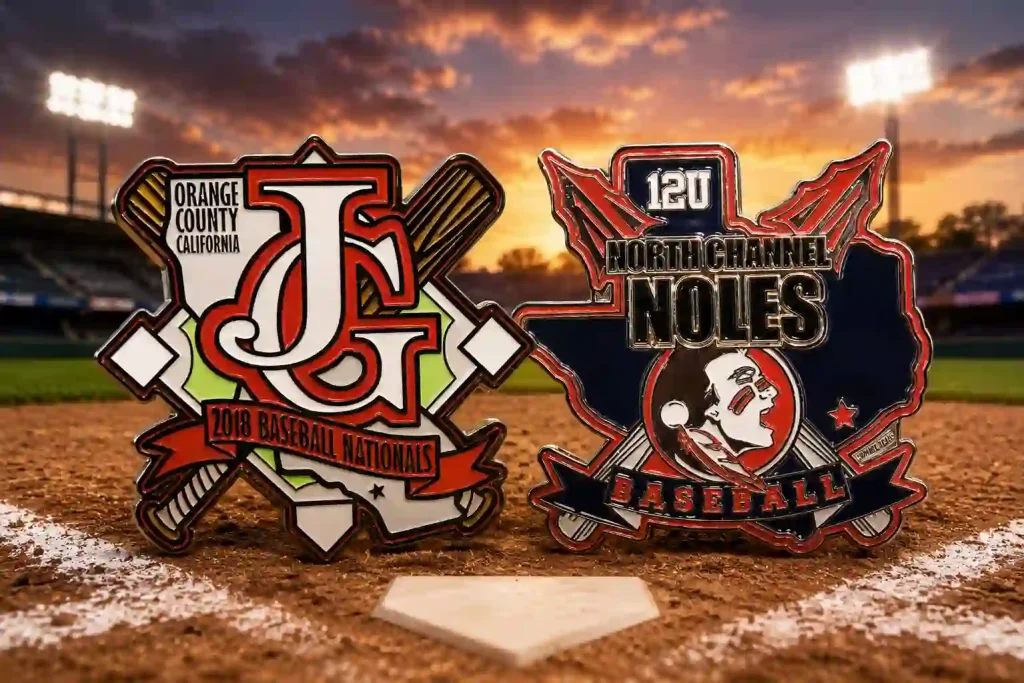
When you order custom trading pins, size is not something to choose casually. This is especially true for baseball teams, softball teams, and events like Cooperstown, Little League, USSSA, or Omaha, where the size of the pin can directly affect how the final design looks and how well it trades at the event.
Regular enamel pins can be made smaller because they often only feature a logo or a simple design. But tournament trading pins usually need to carry much more information, such as the team name, year, location, player-related elements, sports graphics, and sometimes add-ons like danglers, spinners, or sliders.
If the trading pin size is too small, all of these details can feel crowded. The text becomes harder to read, the artwork loses clarity, and the final pin may not stand out during trading.
In general, we do not recommend making trading pins smaller than 1.5 inches. For most teams, 1.75 to 2 inches is a safer choice. It gives the design enough room to look clear and complete, without pushing the cost too high.
Don’t Choose a Smaller Size Just to Save Money
Many teams ordering trading pins for the first time focus on price first. A smaller size can lower the unit cost, but trading pins are not just about getting something made. The real question is whether kids will actually want to trade for them.
At tournaments, kids are quick to judge whether a pin looks cool and feels worth trading for. If the pin is too small, the text is crowded, or the artwork is hard to see, it may not become a popular trading piece, even if it was cheaper to produce.
If your design is very simple, with just a logo and year, 1.5 inches may work. But if your design includes more details, or if you are going to an event with an active pin trading scene, it is better to start with 1.75 inches or 2 inches.
1.25 Inches
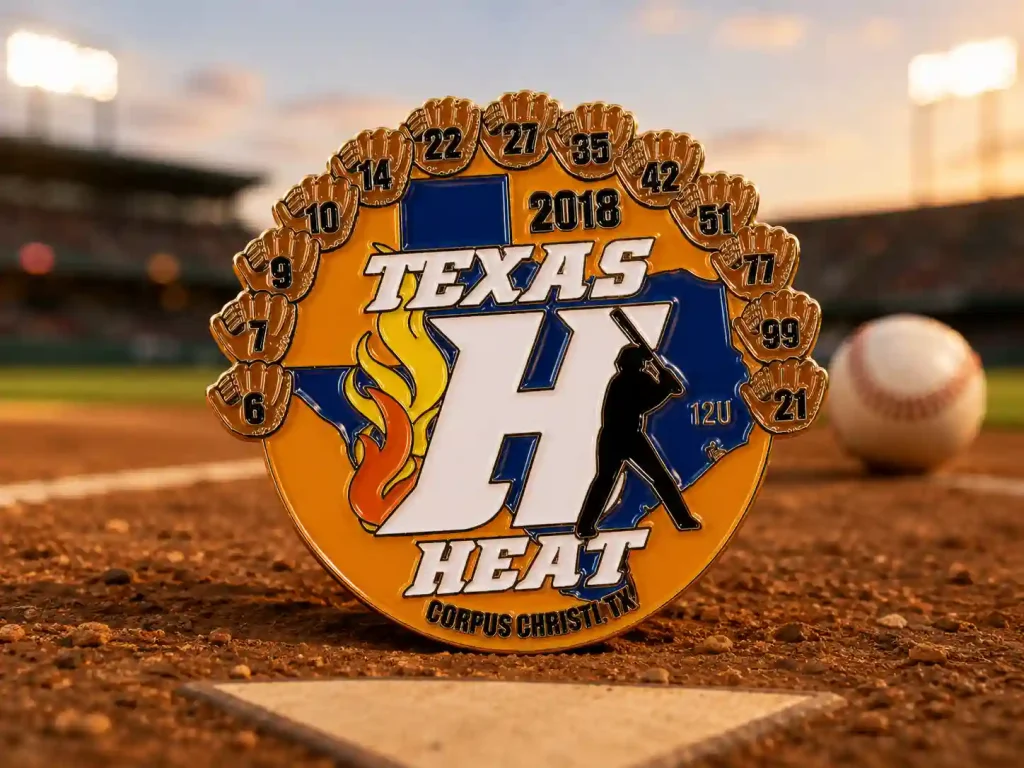
1.25-inch trading pins are lightweight and lower in cost, but the design space is very limited.
This size can work for a simple logo or a small keepsake for younger players. However, if you need to include more text, detailed artwork, or multiple design elements, it usually becomes too tight. The lettering may become very small, and the overall layout can look crowded.
For that reason, 1.25 inches is not a size we usually recommend as the main option, especially for Cooperstown-style tournaments, complex shapes, or designs with a lot of information. It is better suited for simple souvenir pins, not for team pins meant to stand out in active trading.
1.5 Inches
1.5 inches can be seen as the minimum recommended size.
It has more presence than a standard 1-inch pin and can usually fit a basic logo, year, and short text. For teams with a limited budget and a clean, simple design, this can be a practical choice.
When the artwork is not too busy, a 1.5-inch trading pin can still look clear and organized.
However, if your design includes several text areas, a mascot, sports elements, player details, or extra attachments, this size can start to feel limited. It may still be possible to make, but the finished pin may not look as bold or trade as well at the event.
1.75 Inches
A Balanced Size for Most Teams
1.75 inches is a common choice for many baseball and softball trading pins.
Compared with 1.5 inches, it gives the design more space to breathe. The main details are easier to see, and the overall pin does not feel as crowded. At the same time, the cost usually stays more manageable than larger sizes.
For most youth baseball, softball, travel team, and tournament orders, 1.75 inches is a good balance between budget and presentation.
If your design is not extremely complex but you still want the pin to look complete and professional, 1.75 inches is usually a safe starting point. It works well for teams that want something better than a small basic pin without moving into a much higher price range.
2 Inches
Better for Detailed Designs and Bigger Events
If your design includes more details, or if you are attending a tournament where pin trading is very active, 2 inches is often the better choice.
This size gives the artwork more room. Text can be easier to read, graphics can look more complete, and the layout does not need to feel squeezed. If you want to add a dangler, spinner, or slider, a 2-inch trading pin usually gives you more flexibility.
For events like Cooperstown, Omaha, USSSA, Perfect Game, or Little League World Series-style tournaments, 2 inches gives the pin a stronger visual presence. It looks better in hand, stands out more on a pin towel or backpack, and feels more exciting for kids to trade.
For pins that are 2 inches or larger, we usually recommend using double butterfly clutches. This helps the pin stay more secure, keeps it from spinning or tilting, and makes it better for wearing or displaying.
2.25–2.5 Inches
Great for Special Pins, But Not Always for the Whole Order
2.25 to 2.5 inches is more of a premium size. It works well for collector pins, special trading pins, or standout pieces for major tournaments.
This size gives you more room for detail and is especially useful for complex shapes, state maps, layered designs, spinners, sliders, danglers, or oversized pins. It has stronger visual impact and can become one of the pins kids really want to trade for.
That said, this size is not always the best choice for every pin in your order. Larger pins cost more and are heavier. If the entire order is made at 2.5 inches, the total budget can increase quickly.
A more practical approach is to order your regular trading pins in 1.75 or 2 inches, then make a smaller quantity of oversized pins as special pieces. This helps control the budget while still giving your team something exciting to bring to the trading scene.
What Makes a Pin Worth Trading?
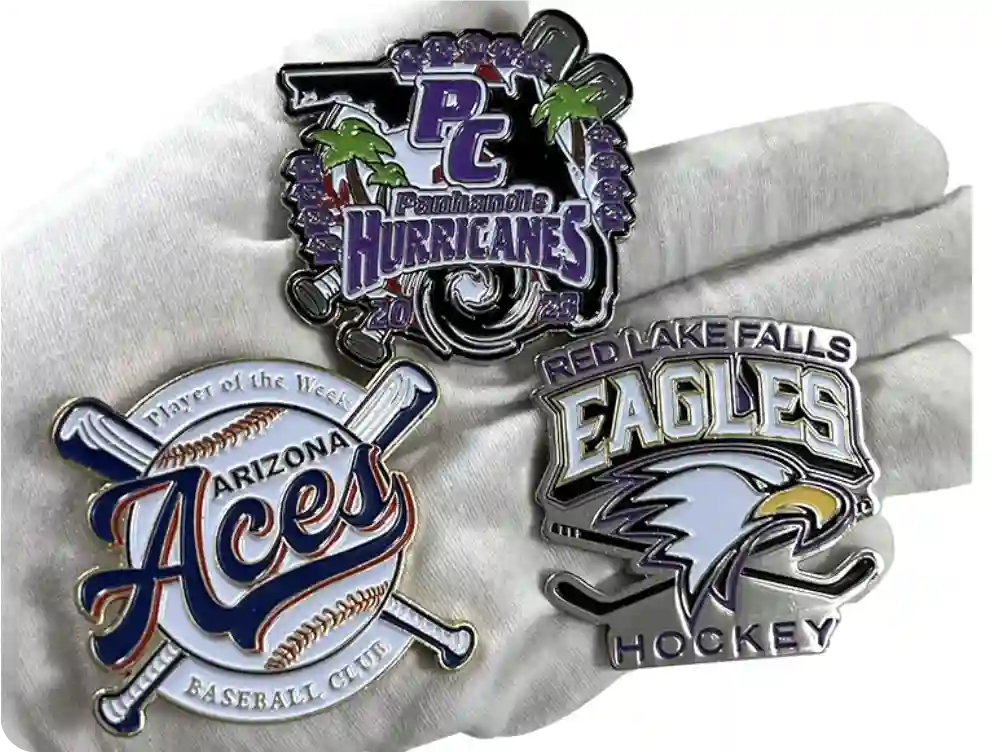
Based on customer feedback, the most important thing about tournament trading pins is not simply making them bigger or cheaper. What really matters is whether they have strong appeal at the event.
At events like Cooperstown, pin trading is often a big part of the experience. Kids compare different team designs, looking for something cooler, more unique, or simply more fun to trade. A well-designed pin may even become popular enough that other kids are willing to trade two or three regular ones for it.
Some coaches also suggest giving each player one oversized pin and telling them not to trade it too quickly. These special pieces are not always meant for mass trading. Instead, they make the team’s collection more exciting and give kids something memorable to bring to the tournament.
So the goal is not to choose the biggest size possible. A better approach is to choose a trading pin size that keeps your design clear, balanced, and attractive in the real trading environment.
Not Sure Which Trading Pin Size to Choose?
Choosing the right trading pin size can affect how clear your design looks, how polished the finished pin feels, and how attractive it is during pin trading.
If you are not sure which size to choose, you can send us your design idea or basic project details, such as your team name, year, tournament name, location, and the design elements you want to include. The VeperPins team will review your content and recommend a trading pin size that fits your design and event.
Contact us through the form to start your custom trading pin project.