Table of Contents
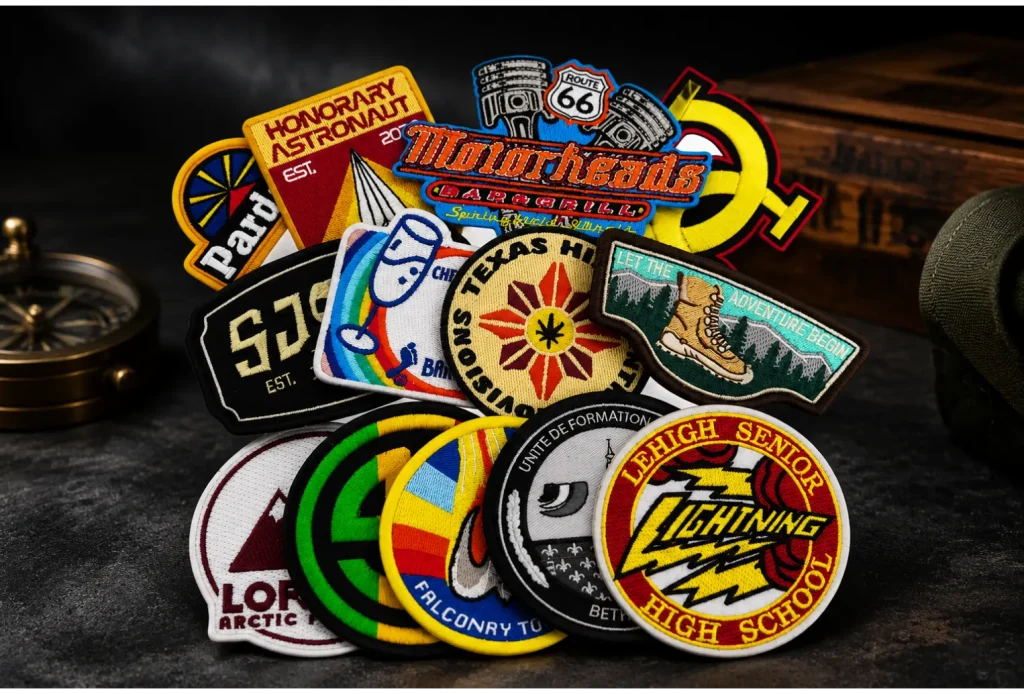
Are you planning to order custom patches for your team, brand, uniforms, or event? Before placing an order, it helps to understand the different patch types, size options, backing choices, and production process.
This can help you choose the right option and avoid common issues such as unclear details, unsuitable sizing, or the wrong attachment method.
In this guide, you’ll find:
- Common custom patch types
- The best patch options for different designs
- Size, backing, and border choices
- Important details to check before production
- The basic custom patch ordering process
What Are Custom Patches?
Custom patches are made with your logo, text, artwork, team name, or brand identity. They are commonly used on uniforms, hats, jackets, backpacks, team apparel, workwear, outdoor gear, and event merchandise.
They can help show your brand, identify a team, mark a special event, or make regular clothing and gear more recognizable.
Depending on your artwork and how the patch will be used, you can choose from embroidered, woven, printed, PVC, chenille, leather, or Velcro styles.
Main Types of Custom Patches
Choosing custom patches is not just about which one looks better. The most important question is which patch type works best for your design.
Does your artwork include small text? Does it have gradients or photo-style details? Will the patch be used on uniforms, hats, jackets, backpacks, or outdoor gear? These details all affect the final choice.
Below are the most common types of custom patches and how they are different.
Embroidered Patches
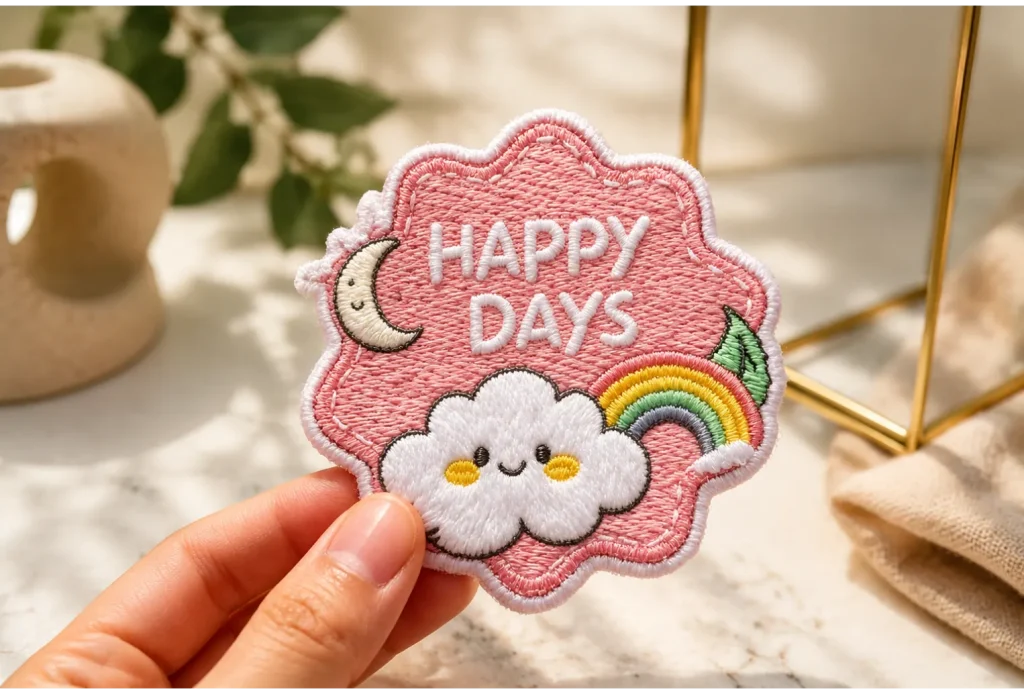
Embroidered patches are one of the most familiar patch styles. They are the classic stitched patches many people already know.
They work well for uniforms, jackets, hats, workwear, schools, clubs, team logos, and company branding. The stitched threads create a raised texture and a thicker look, giving the patch a classic and durable feel.
If your design has a simple logo, bold lines, and clear text, embroidered patches are usually a reliable choice.
However, they are not always the best option for very small text, gradients, photo effects, or highly detailed artwork. Since embroidery thread has thickness, tiny details may blend together or become less clear.
Woven Patches
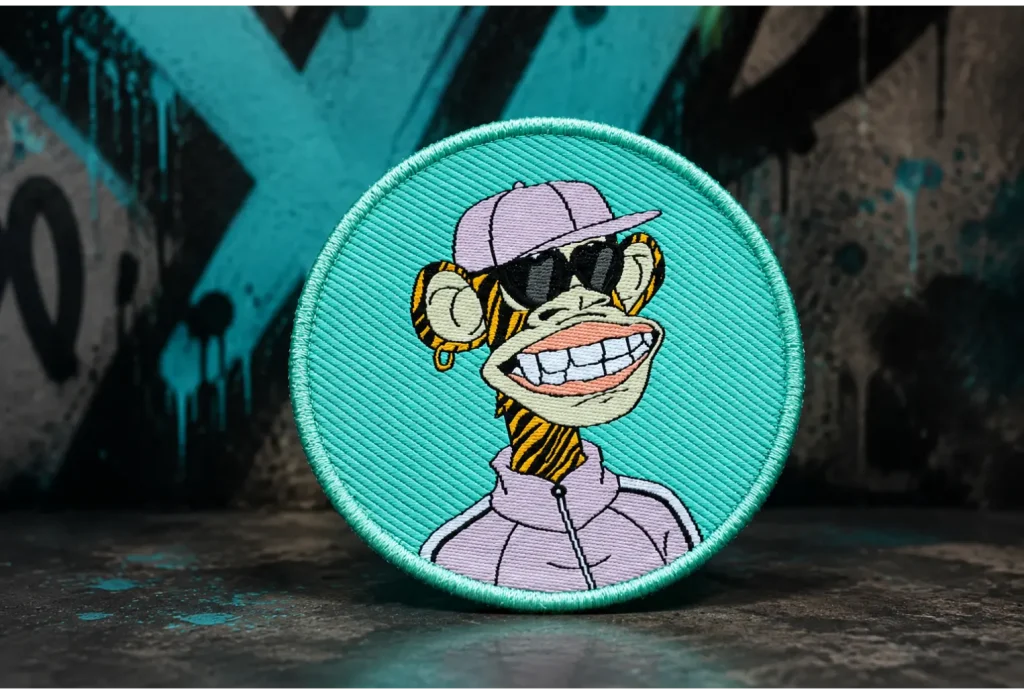
If your artwork includes small text, fine lines, or a more detailed logo, woven patches may be a better choice.
Woven patches have a flatter surface than embroidered patches, and the threads are finer. This makes details cleaner and easier to read. Many brand labels, clothing labels, complex logos, and small-text designs use this patch style.
They do not have the same raised stitched texture as embroidered patches, but their advantage is better detail and a cleaner finish.
Simply put: choose embroidered patches if you want a traditional stitched texture; choose woven patches if you need small text and fine details to look clearer.
Printed Patches
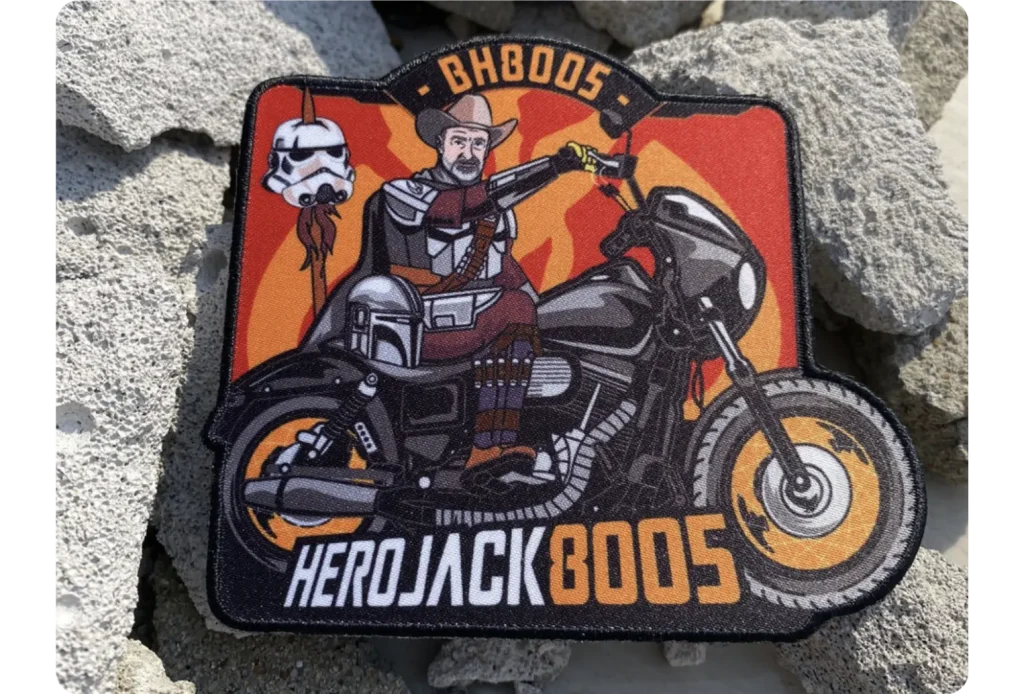
Printed patches are a good choice for designs with complex colors.
If your artwork includes gradients, shadows, photos, illustrations, or full-color artwork, printed patches can usually reproduce the original design more accurately than embroidered or woven patches.
They work well for event artwork, photo-style designs, detailed brand graphics, and colorful designs that are difficult to create with thread.
However, printed patches have a flatter printed surface and do not have the thread texture of embroidered or woven patches. If texture is important to your design, printed patches may not be the first choice.
PVC Patches
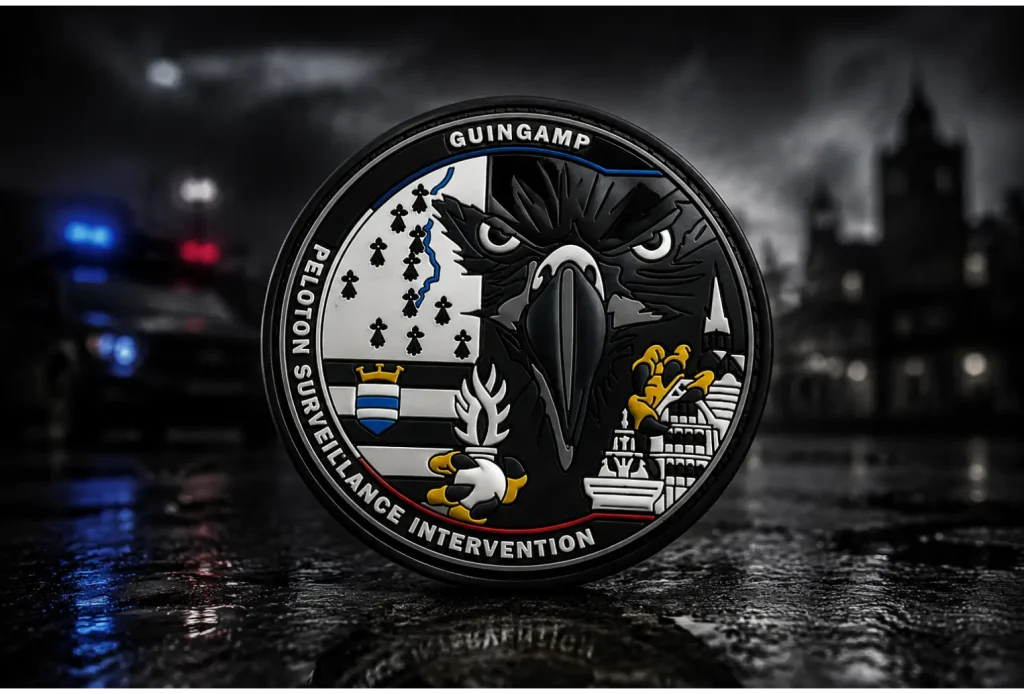
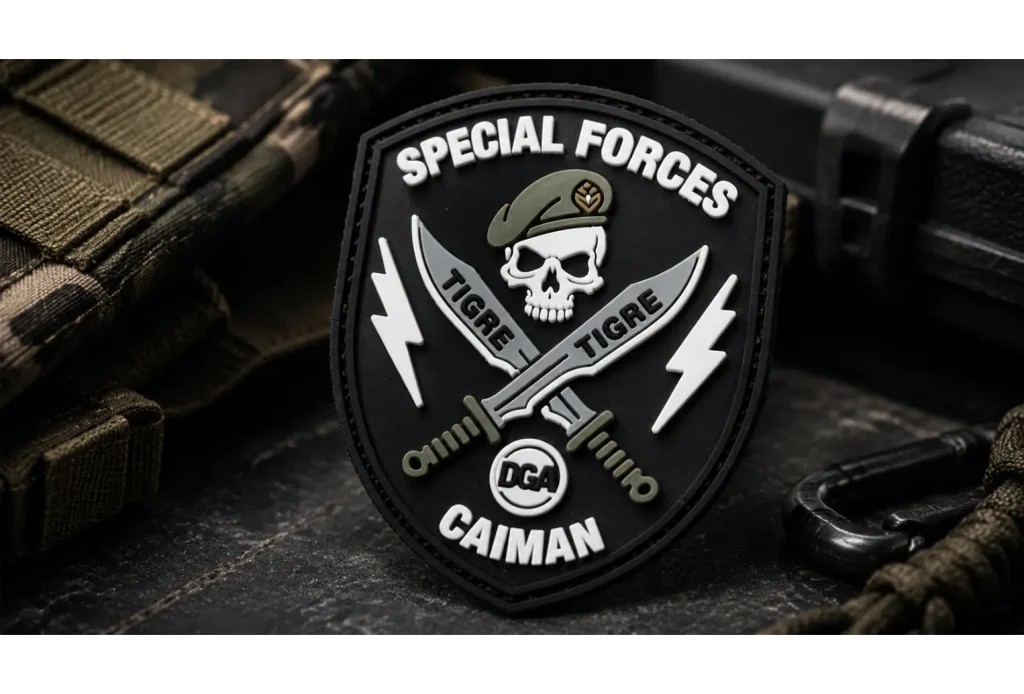
PVC patches are made from soft rubber, making them a practical choice for outdoor gear, backpacks, tactical equipment, morale patches, uniforms, and other items that may be exposed to dust, rain, or rough handling.
They are durable, waterproof, easy to clean, and can be made with 2D or 3D details. This makes them popular for military-style designs, sports bags, outdoor products, and tactical gear.
If you need something tougher and easier to maintain than a fabric patch, PVC is often a better option.
One thing to keep in mind is that a mold is usually required, so small orders may have a higher unit price. For larger quantities, the overall cost becomes more reasonable.
Chenille Patches
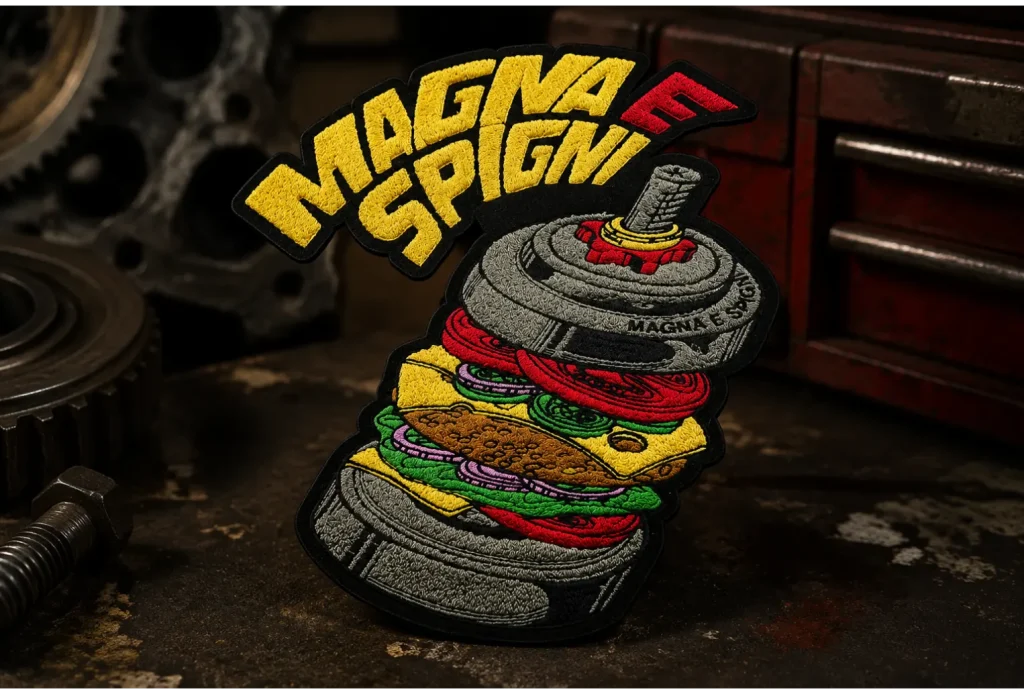
Chenille patches have a soft, fuzzy texture that makes the design stand out right away.
They are often used for varsity jackets, school letters, sports teams, large numbers, mascots, and streetwear. Big letters, years, team names, and simple graphics usually work especially well with this style.
This option is not ideal for small text, thin lines, or complex artwork. It works best for large, simple designs that need a bold look.
If your artwork includes many small details, embroidered, woven, or printed patches may be better choices.
Leather Patches
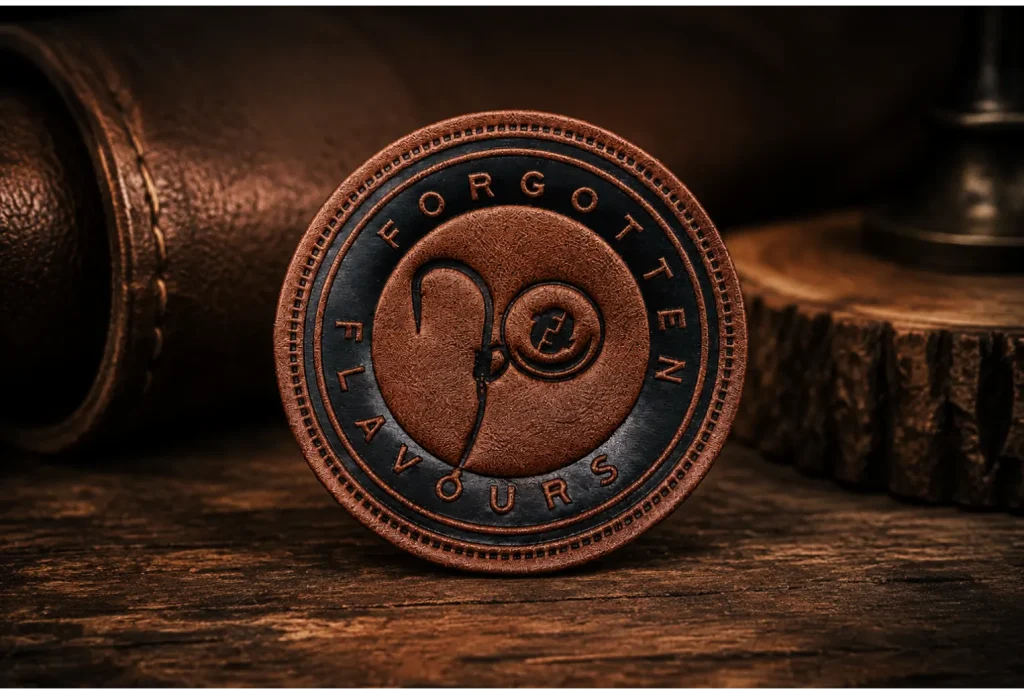
Leather patches are a good choice if you want a clean, simple, and more premium look.
They are commonly used on hats, denim jackets, beanies, backpacks, outdoor apparel, and brand labels. Common finishes include debossed, embossed, and laser-engraved details.
This style works best with simple logos, brand names, or text-based designs. It usually does not need many colors. In many cases, the simpler the design, the better the final result.
If your artwork includes many colors, gradients, photos, or detailed illustrations, leather may not be the best option.
Velcro Patches
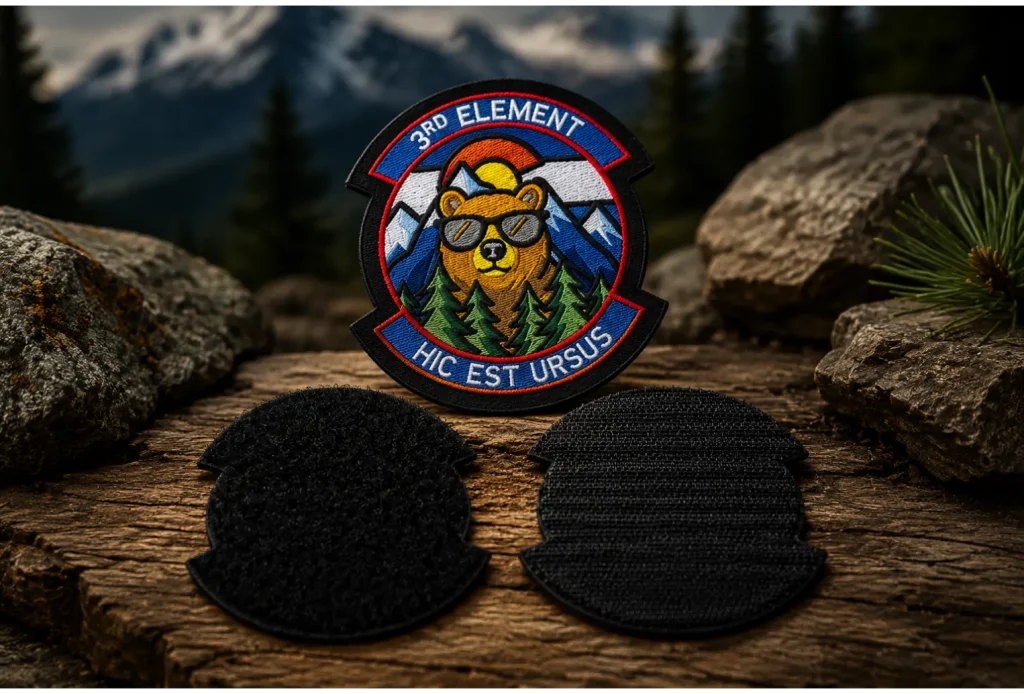
Velcro patches are patches with a hook-and-loop backing, not a separate production method.
They are useful when the patch needs to be removed, replaced, or used again. Common uses include tactical gear, uniforms, backpacks, morale designs, airsoft teams, and outdoor equipment.
If you need to change patches for different situations, Velcro backing is usually more convenient than sew-on or iron-on options.
Many customers search for custom Velcro patches directly, so it is worth considering this option when choosing your patch details.
How to Choose the Right Custom Patch Type
When choosing a custom patch type, you can start with your artwork and how the patch will be used.
Simple Logos, Bold Lines, and Clear Text
Embroidered patches are a good choice. They have a visible stitched texture, a classic look, and a durable feel. They are often used for uniforms, jackets, hats, workwear, and team branding.
Small Text, Fine Lines, and Detailed Logos
Woven patches are usually more suitable. They have a flatter surface and finer threads, so small details are clearer than standard embroidery. They are commonly used for brand labels and clothing labels.
Gradients, Shadows, Photos, and Full-Color Artwork
Printed patches are the better choice. Printing can reproduce complex colors and detailed artwork more closely, especially when the design is difficult to create with thread.
Outdoor Gear, Backpacks, Tactical Gear, and Morale Patches
PVC patches are a practical option. PVC is waterproof, easy to clean, and resistant to dirt, making it suitable for patches that may be exposed to rain, dust, or rough use.
School Letters, Sports Team Numbers, Varsity Jackets, and Vintage School Style
Chenille patches work well for this type of design. The soft fuzzy texture is bold and eye-catching, especially for large, simple graphics.
Hats, Denim, Beanies, Outdoor Apparel, and Brand Labels
Leather patches are a good option. Simple logos, brand names, and text marks can create a clean and premium look without needing complex colors.
How to Design Patches
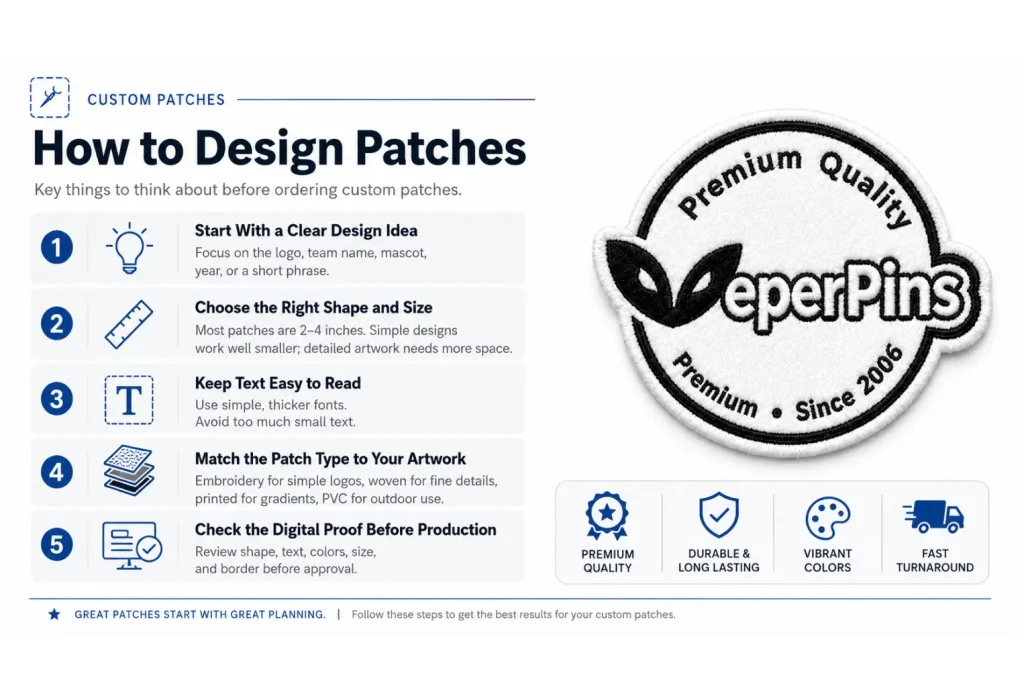
You do not need to have a perfect professional design before ordering custom patches. What matters most is knowing where the patch will be used, what it should show, how detailed the artwork is, and whether you want the final patch to look classic, detailed, or more practical for outdoor use.
Start With a Clear Design Idea
Start by deciding the most important information on the patch. This may be your brand logo, team name, school name, event theme, mascot, year, or a short phrase.
Try not to include too many elements at the beginning. A patch has limited space, and the more content you add, the more crowded it can look. Smaller patches especially work better with simple, clear, focused designs.
Choose the Right Shape and Size
Common patch sizes are usually between 2 inches and 4 inches.
Smaller sizes are good for simple logos, initials, or short text. Larger sizes are better for mascots, badge-style designs, event artwork, or designs with more detail.
Patch shapes can be round, square, shield-shaped, rectangular, or custom-shaped based on your logo. If your artwork already has a clear outline, a custom-shaped patch can make it more recognizable.
Keep Text Easy to Read
Text is one of the most common problem areas in patch design.
If the text is too small or too thin, it may not come out clearly, especially with embroidered patches. Simple, thicker fonts usually work better for embroidery.
If your design includes a lot of small text, fine lines, or detailed artwork, woven patches or printed patches may be better choices.
When designing your patch, keep only the most important text, such as your brand name, team name, year, location, or short slogan. Avoid placing long sentences inside a small patch.
Match the Patch Type to Your Artwork
Different patch types work better for different designs.
Simple logos can be made as embroidered patches. Small text and fine details may work better as woven patches. Gradients, photos, and complex colors are better suited for printed patches. Outdoor, waterproof, and dirt-resistant uses may be better suited for PVC patches.
If the wrong patch style is chosen at the beginning, even a good design may not come out clearly. Before production, it is best to let the design team review your artwork and recommend the right method.
Check the Digital Proof Before Production
Always review the digital proof before production starts.
This step lets you check the patch shape, text, colors, size, border, and overall layout. If there are issues with small text, thin lines, or too many colors, it is better to adjust them before production.
Approving the proof before production helps avoid many unnecessary mistakes.
Custom Patches Size Guide
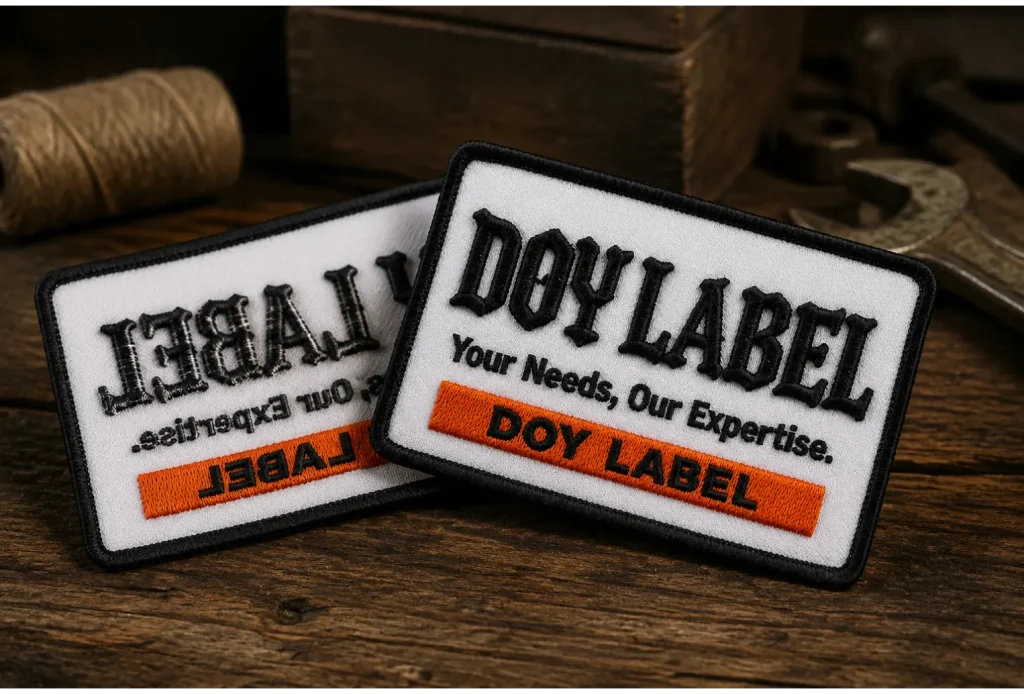
Choosing the right patch size is not about making it as large as possible, or choosing the smallest size just to save cost. The right size depends on where the patch will be used, how complex the artwork is, and how visible you want the final patch to be.
Hats and Small Logos: 2–3 Inches
If the patch will be used on hats, polo shirts, small backpacks, or simple brand logos, 2–3 inches is usually a good choice.
This size does not look too large and works well for simple graphics, initials, and small-area branding.
Company Uniforms and Chest Patches: Around 3 Inches
For employee uniforms, workwear, jacket chest patches, or branded apparel, around 3 inches is a common size.
It is large enough for the logo to be seen clearly, but not so large that it affects the overall look of the garment.
Schools, Sports Teams, Camps, and Event Patches: 3–4 Inches
If the patch needs to include a team name, school name, year, event name, or simple artwork, 3–4 inches is often a good size.
This size works well for souvenir patches, event patches, scout-style patches, and team patches.
Military, Police, Fire Department, and Tactical Gear: 2–4 Inches
For name patches, department patches, flag patches, or tactical backpack patches, 2–4 inches is a common range.
Smaller sizes work well for name tapes and sleeve patches, while larger sizes are better for unit logos, morale patches, or gear identification.
When ordering this type of patch, it is also important to confirm whether any official logos or protected marks require permission.
Backpacks, Jackets, Vests, and Outdoor Gear: 3–5 Inches
If you want the patch to stand out on a backpack, denim jacket, outdoor gear, motorcycle vest, or club apparel, 3–5 inches is a good size range.
This size gives more room for complete artwork, club names, or commemorative designs.
Large Back Patches: 8 Inches and Above
For motorcycle club back patches, band jackets, large team logos, or large decorative patches, 8 inches and above may be suitable.
The back area offers more space and works well for designs that need stronger visual impact.
Patch Backing Options
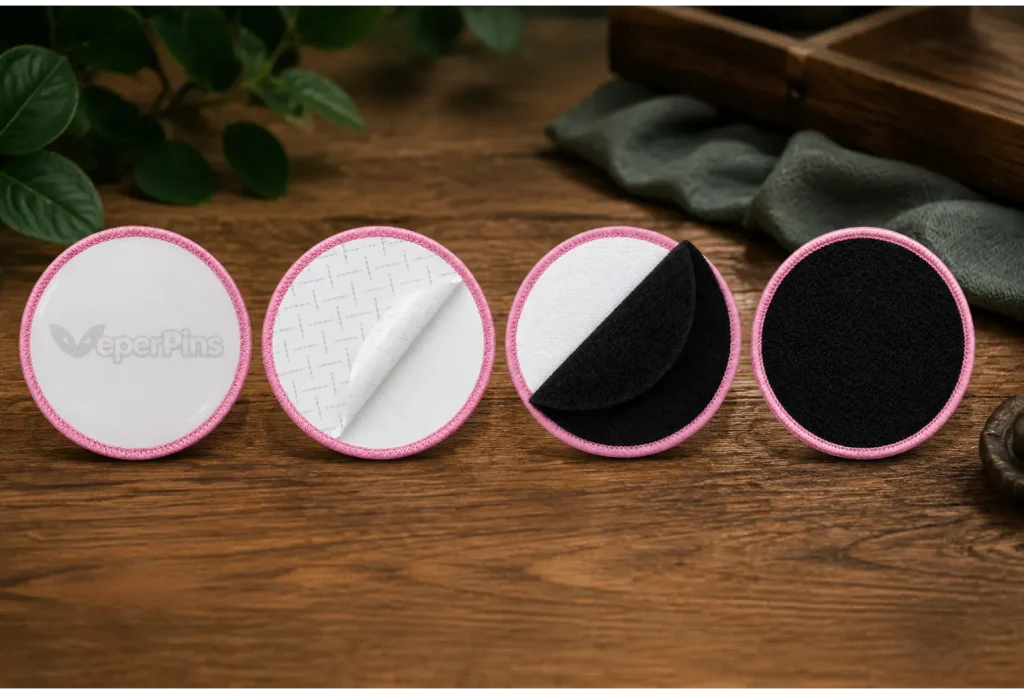
The backing you choose affects both how the patch attaches and how well it holds up over time.
Sew-On Backing
If the patch is going on a uniform, jacket, hat, or fabric bag and you want it to stay there, sewing is usually the safest bet. It’s especially good for things that get worn and washed a lot.
Iron-On Backing
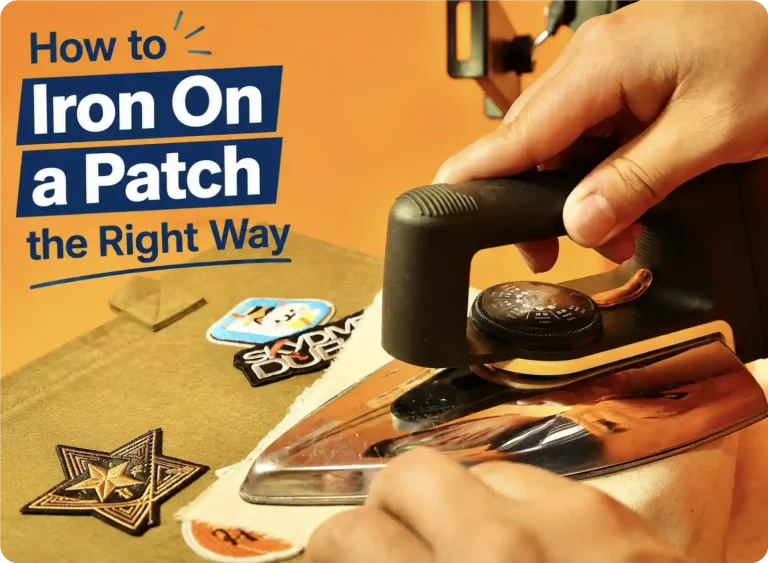
Denim, cotton, and canvas usually work well with an iron or heat press. It’s easy to do at home, but if the fabric doesn’t handle heat well, don’t force it.
Hook-and-Loop Backing
This works well when you want to swap patches in and out. If your tactical bag or uniform already has a loop panel, you can attach the patch right away. If not, you’ll need to add one first.
Adhesive Backing
This is basically the sticker version. Peel off the liner and press it on. It’s handy for events, packaging, and displays, but it’s not something we’d rely on for clothing that gets worn and washed all the time.
Custom Patch Border Options
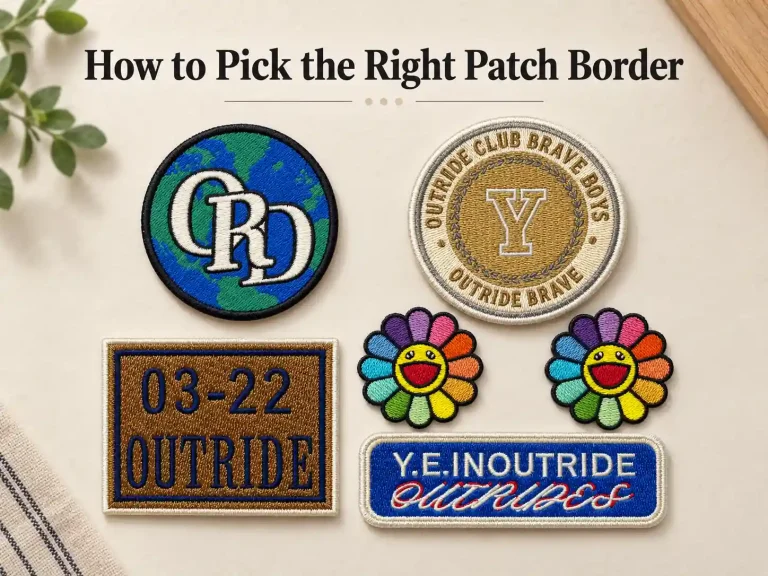
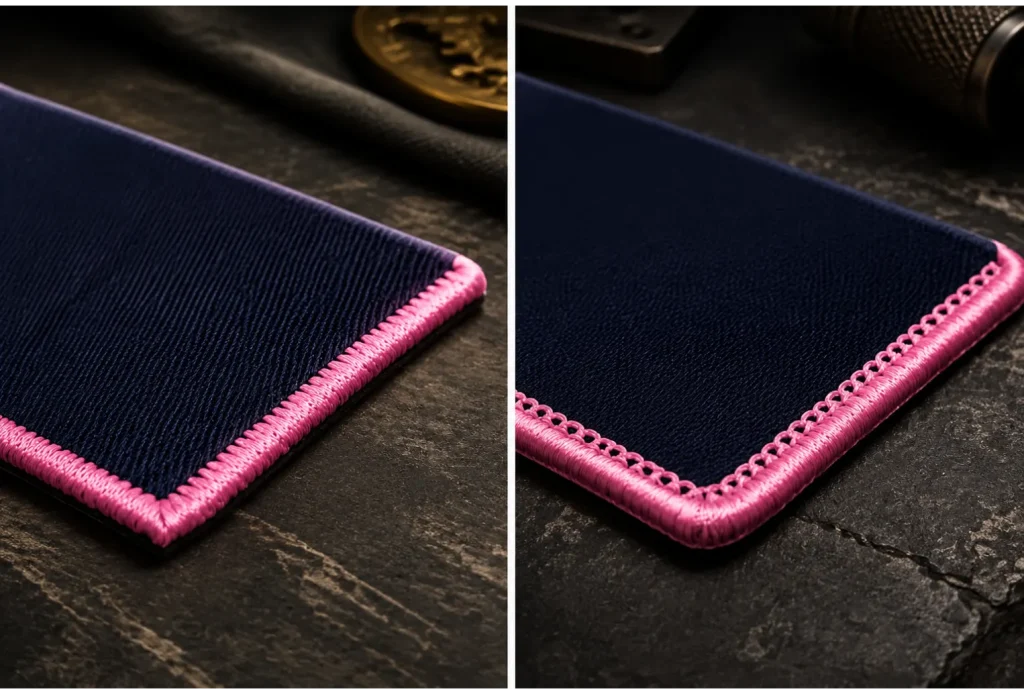
The border affects both the look and durability of a patch. Different patch shapes work better with different border styles.
Merrowed Border
A merrowed border is a common wrapped-edge finish. It gives the patch a classic look and makes the edge feel thicker.
It works best for regular shapes such as circles, squares, shields, and rectangles.
Die-Cut Border
A die-cut border is better for custom-shaped logos, irregular outlines, or more complex shapes.
If your design is not a standard circle or square and needs to follow the artwork outline, a die-cut border is usually the better choice.
Stitched Border
A stitched border gives the patch a cleaner and simpler look.
It is not as thick as a merrowed border, but it feels lighter and flatter. It can also work well for patches with more detailed artwork.
What to Check Before Ordering Custom Patches
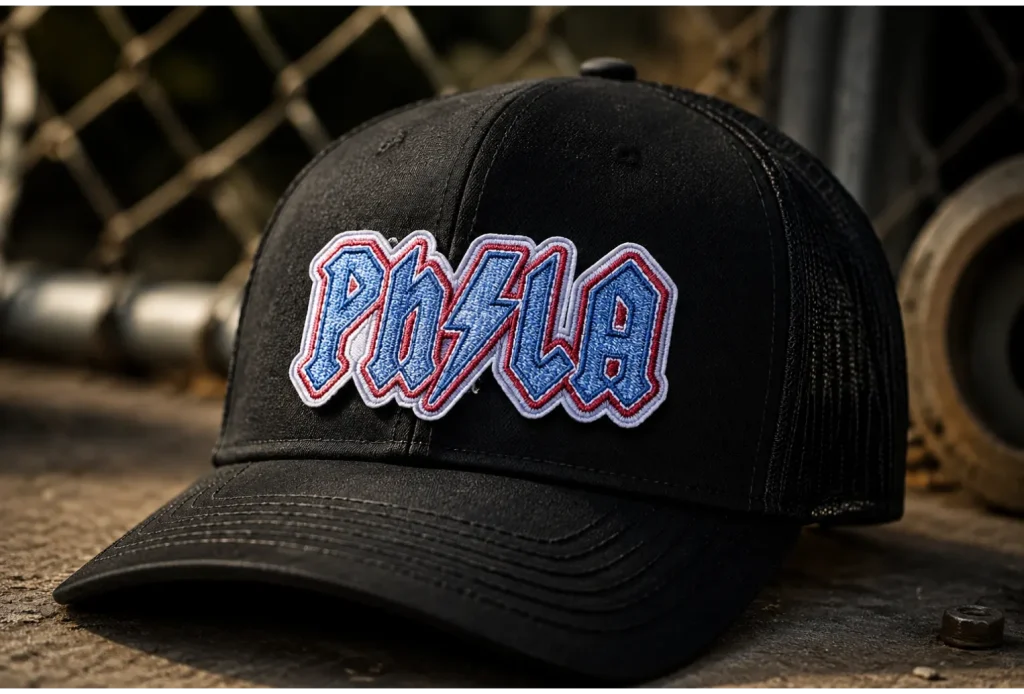
Before placing a custom patch order, it is worth checking a few key details. This can reduce revisions and help the final patches match your expectations more closely.
Make Sure the Artwork Fits the Patch Type
Not every design works well with every patch style.
Simple logos can work well as embroidered patches. Small text and fine lines may be better as woven patches. Gradients and photo-style artwork are usually better as printed patches. Outdoor and waterproof uses may be better suited for PVC patches.
If you are not sure, ask the supplier to recommend the best patch type based on your artwork.
Make Sure the Text Is Clear Enough
Text that is too small or too thin is one of the most common issues in custom patches.
This is especially important for embroidered patches, because thread has thickness and small text may not be clear. If your design includes a lot of text, consider reducing the wording or switching to woven patches or printed patches.
Choose a Size That Fits the Usage
Hats, small logos, and chest patches should not be too large. Backpacks, jackets, event patches, and large back patches can be bigger.
Before ordering, confirm where the patch will be used, then choose the size based on that placement.
Match the Backing to the Fabric
For long-term attachment, sew-on backing is a strong choice.
For easier application, iron-on backing can work well.
For removable patches, Velcro backing is more convenient.
For temporary use, adhesive backing can be used.
Different fabrics work better with different backing types. Nylon, leather, and frequently washed garments should be checked carefully before choosing the backing.
Match the Border to the Patch Shape
Regular shapes can use a merrowed border.
Complex outlines and custom shapes are better suited for die-cut borders.
If you want a cleaner and simpler look, stitched borders are also an option.
Review the Digital Proof Carefully
Before production starts, carefully check the digital proof.
Pay attention to the text, colors, size, border, shape, proportions, and backing. If anything needs to be changed, it should be adjusted before production begins.
How to Make Custom Patches
Once you have an idea for your patch, the production process is usually simple.
Submit Your Artwork or Idea
You can upload a logo, AI file, PDF, PNG, JPG, or even send a simple sketch and design idea.
If you are not sure what the final patch should look like, you can also tell us how the patch will be used, such as for uniforms, hats, backpacks, jackets, event giveaways, or outdoor gear.
Choose the Patch Type and Details
Based on your artwork, we can help confirm the most suitable patch type, such as embroidered patches, woven patches, printed patches, PVC patches, chenille patches, or leather patches.
We will also confirm the size, shape, backing, and border, including whether you need iron-on backing, sew-on backing, Velcro backing, merrowed border, or die-cut border.
Confirm the Quote
After the patch type, size, quantity, and other details are confirmed, we will provide a quote.
The final price can be affected by the patch type, size, quantity, backing, and any special effects. In general, the more patches you order, the lower the unit cost becomes.
Review the Digital Proof
Before production begins, you will receive a digital proof.
This step allows you to check the patch shape, text, colors, size, border, and overall layout. If anything needs to be adjusted, it can be revised before production.
Start Production
Once the proof is approved, we will begin production.
Different patch types use different production methods, such as embroidery, weaving, printing, PVC molding, or leather stamping. During production, we follow the approved design file to make the final patches as close as possible to the confirmed proof.
Quality Check and Shipping
After production, we check the patch colors, text, border, backing, and overall workmanship.
Once everything is confirmed, the patches are packed and shipped. Your custom patches will then be ready to use on uniforms, hats, backpacks, jackets, events, or branded packaging.
Who Uses Custom Patches?
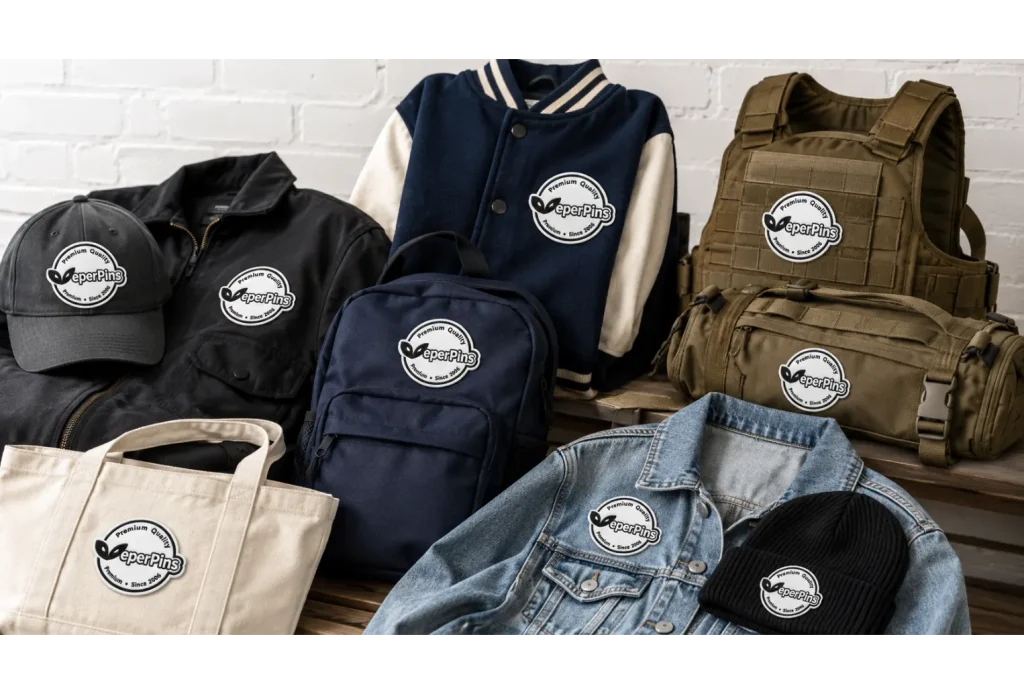
Custom patches are used by many different types of customers. Companies, schools, teams, organizations, and individual creators can all customize patches for different purposes.
Businesses and Brands
Custom patches are great for employee uniforms, hats, jackets, workwear, and branded merchandise. They help make your brand image look more consistent and professional.
Schools, Sports Teams, and Clubs
Patches can show a team name, team logo, member identity, competition year, or event memory. They are often used on school uniforms, team apparel, jackets, and backpacks.
Military, Police, Fire Departments, and Tactical Teams
Patches are commonly used for unit identification, name patches, department patches, commemorative patches, and morale patches. They are often seen on uniforms, tactical vests, backpacks, and gear.
When ordering this type of patch, it is important to confirm whether any official logos or protected marks require permission.
Events, Camps, and Organizations
Custom patches work well as event souvenirs, camp badges, organization patches, or collectible patches. They can help participants feel more connected to the event or group.
Individual Users and Creators
Custom patches can be used to decorate backpacks, hats, denim jackets, and outdoor gear. They are also a good option for artists, bands, and clothing brands creating merchandise.
Ready to Start Your Custom Patches?
If you’re looking for a reliable place to make custom patches, you can send us your logo, design idea, usage, size, and quantity first.
Based on your artwork and how the patch will be used, we’ll help you choose the right patch type, size, backing, and border. Before production, we’ll also provide a digital proof for your approval.
Start your custom patch project through our online quote page.